Field trips, familiar faces, and flocks of Snow geese that numbered in the tens of thousands - this was Marsh Madness 2026.
This isn’t March Madness, we’re not talking about any brackets or college basketball here. Marsh Madness is a migration celebration, welcoming Sandhill cranes and waterfowl to a key stopover site on their springtime journey north. The annual festival takes place at Goose Pond Fish & Wildlife Area in Linton, IN; occurring in late February nowadays, since earlier migration patterns are being seen due to climate change. Friends of Goose Pond has held the event since 2010; attracting birders from across the Midwest with guided tours, educational presentations, a craft fair, and more.
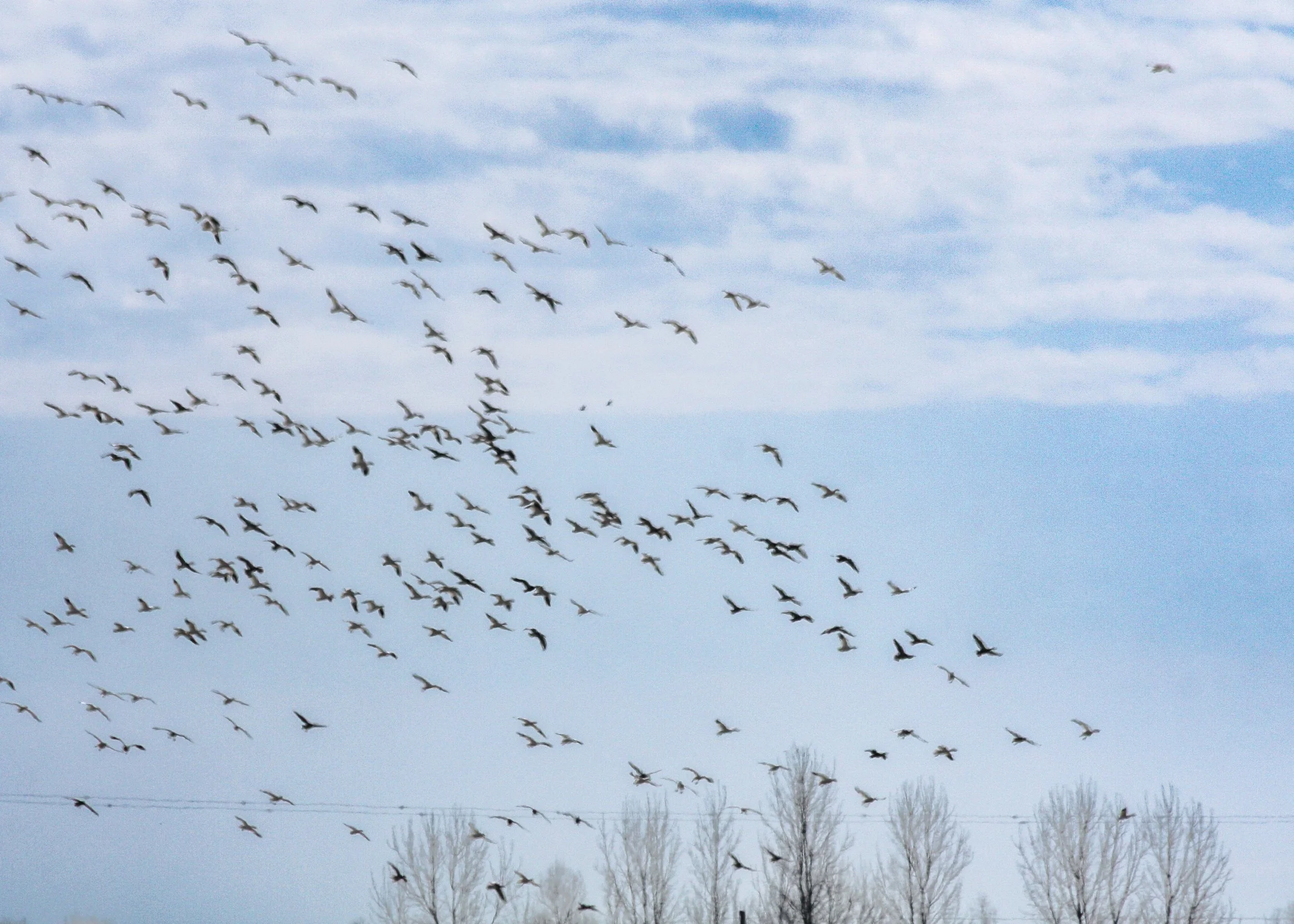
A 2-hour drive started our Saturday morning, leaving the house earlier than my partner Amanda would’ve preferred, but an initial stop for coffee seemed like a fair compromise. The journey can oftentimes be almost as enjoyable as the destination when it comes to birding; a Red-tailed hawk on a billboard or a group of Wild turkeys in a field can help ease the boredom of a long road trip. This car ride started off a bit slow however, little to see until glimpsing a pair of Bald eagles as we neared our destination. Only a few moments later though, everything changed. The vast, open sky before us began to fill with formations of dark little dots heading our way. What were they? Cranes? Geese? The excitement built as I pulled over on the shoulder of the road, throwing on the hazard lights and opening up the sun roof. Hundreds of birds now flew directly above, announcing their presence with calls that were quickly identified by Merlin Bird ID as those of Snow geese; confirming what I was seeing through the camera viewfinder. Amanda and I sat there in awe, as seemingly unending waves of geese continued to pass overhead for the next several minutes. Less than a half hour remained as we continued on our way, occasionally spotting some flocks of Sandhill cranes in addition to more Snow geese.
We arrived at Goose Pond shortly before 9 am, energized by the thousands of birds already seen so far. Rounding a curve on the highway brought the first units of marshes into view. Muskrat huts dotted the pockets of open water, made from the dead vegetation that filled the surrounding landscape. I parked the car in a pull-off beside the road and began looking for birds. A camo-clad figure emerged from the cattails a moment later, one of the many hunters that frequent and support this Fish & Wildlife Area (FWA). We struck up a brief conversation, with him showing off the morning’s harvest: a pair of Snow geese. Hunters play a vital role in conservation here in the United States, paying for public lands and wildlife restoration through hunting license sales and taxes on guns and ammunition. The subject of Snow goose hunting came up later on during our bus tour, when the guide mentioned that an overabundance of geese has been detrimental to the tundra habitat of the Hudson Bay and other nesting areas. Snow goose populations were decimated around the turn of the 20th century, but began to rebound by the 1970s thanks to conservation efforts. Those efforts quickly seemed to be too successful, the population grew exponentially until an estimated peak of 20 million birds in 2007. Researching for this blog post, I learned that those numbers have declined sharply in recent years, dropping the population to an estimated 5 million breeding adults currently. Snow geese are still listed as “Least Concern” by the IUCN, but it would appear that close monitoring of the species should take place to ensure we don’t ever come close to losing them again.
Goose Pond has a state-of-the-art visitor’s center, an uncommon feature for most Fish & Wildlife Areas. The panoramic observation deck overlooks a marsh unit below, often yielding spectacular views of waterfowl. A couple hundred Northern Pintail ducks were dabbling there when we arrived, a new lifer species for me! Posted up at the visitor’s center were my friends from the International Crane Foundation. The ICF does incredible work with all 15 species across the world, playing a direct role in their conservation. I first learned about the organization at Marsh Madness last year and went on to volunteer with them at a later event, working the outreach table to spread the good word of cranes. Check out their booth if you ever see the ICF at a birding event; you can play trivia games, see the crane-shaped hand puppets used to rear chicks, and learn all about these majestic birds from my fellow Craniacs.
The main events of Marsh Madness take place at Humphrey’s Park, so that’s where we headed next. While Amanda snagged us seats for the 10 am Birds of Prey presentation, I wrote our names down for seats on the bus tour — be sure to sign up early if you go, seats fill up quick! The DNR brought out the classics for this raptor demo: American kestrels, Red-tailed hawk, and of course, a Bald eagle. Both sexes of the American kestrel were on display, demonstrating the sexually dimorphic appearance of these pocket-sized predatory birds. Male kestrels are easily distinguished by their slate-blue crown and wings; while females have a more muted appearance, a typical trait of birds. The Red-tailed hawk came out next, seeming unsure about the crowd as it emerged from the dog kennel used for transport. Fun Fact: the brick-red tail feathers that give this hawk its name are a sign of maturity, not coming in until the individual is at least 2 years old. Closing out the program was the crowd favorite, a 22 year-old Bald eagle. The presenter told the classic conservation success story of this magnificent species, from the DDT crisis to the soaring populations we see today. Bald eagles were almost non-existent in Indiana prior to their reintroduction in 1985, now we have over 350 nesting pairs in the state, talk about a comeback story! All of the raptors that took part in this presentation were individuals with injuries that made them non-releasable after being rehabilitated. Often coming into close contact with cars, raptors are especially prone to human-inflicted injuries and require veterinary care and/or rehabilitation. The Ornithology section here on our website features an article written by bird rehabilitators Kelly and David Ward of Featherhaven; it mainly talks about songbirds, but they’ve hinted at a raptor-specific article coming in the future.
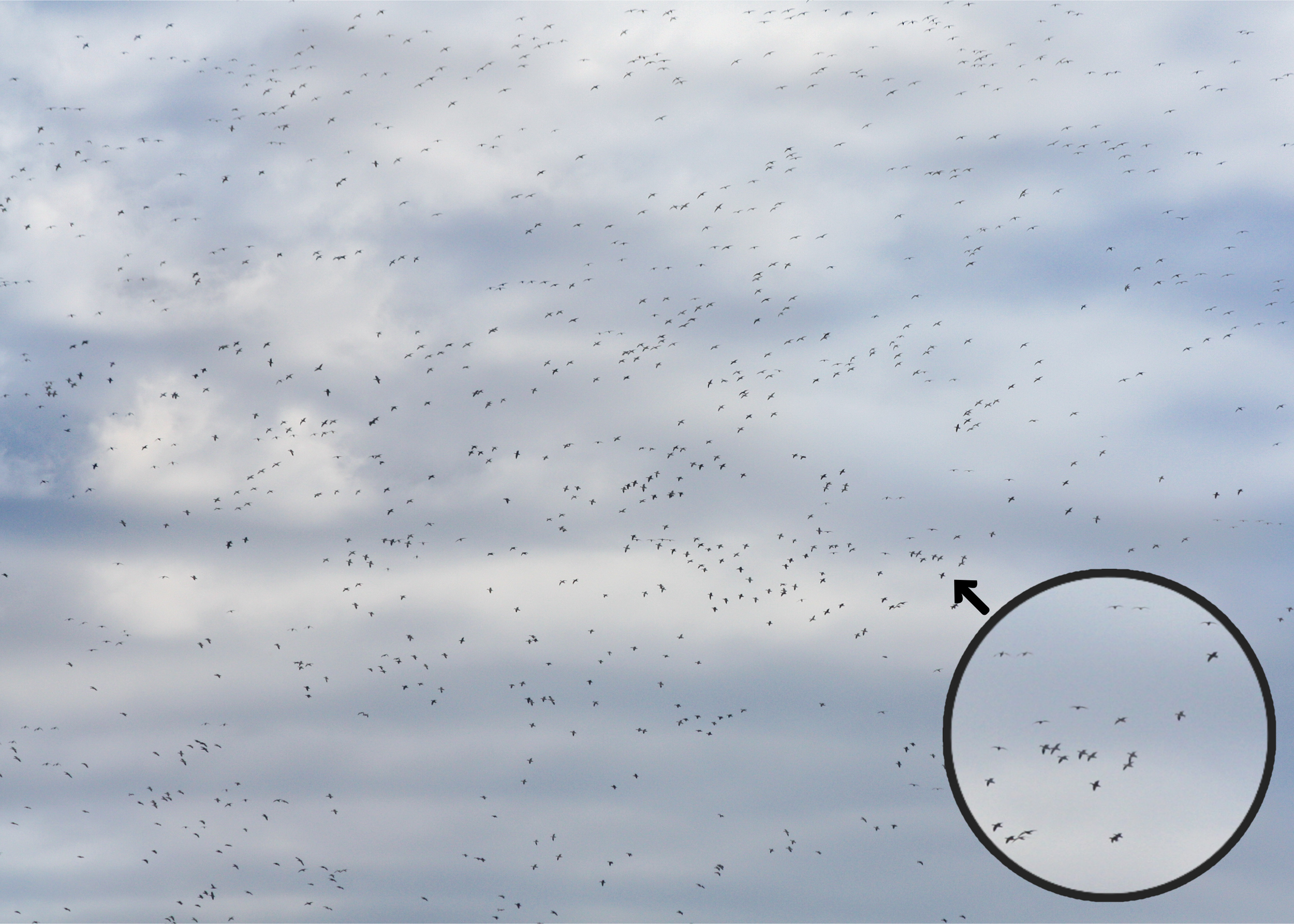
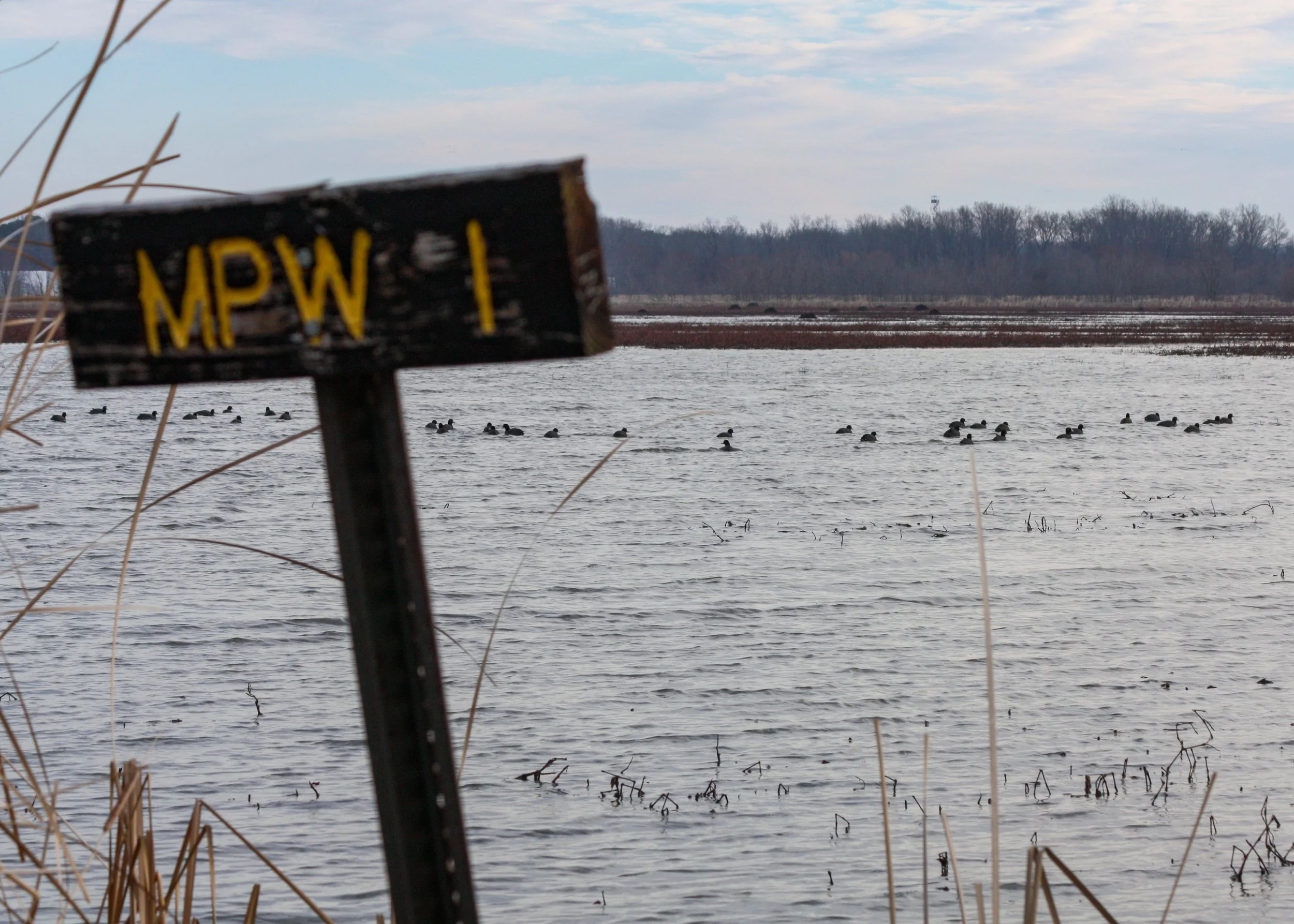
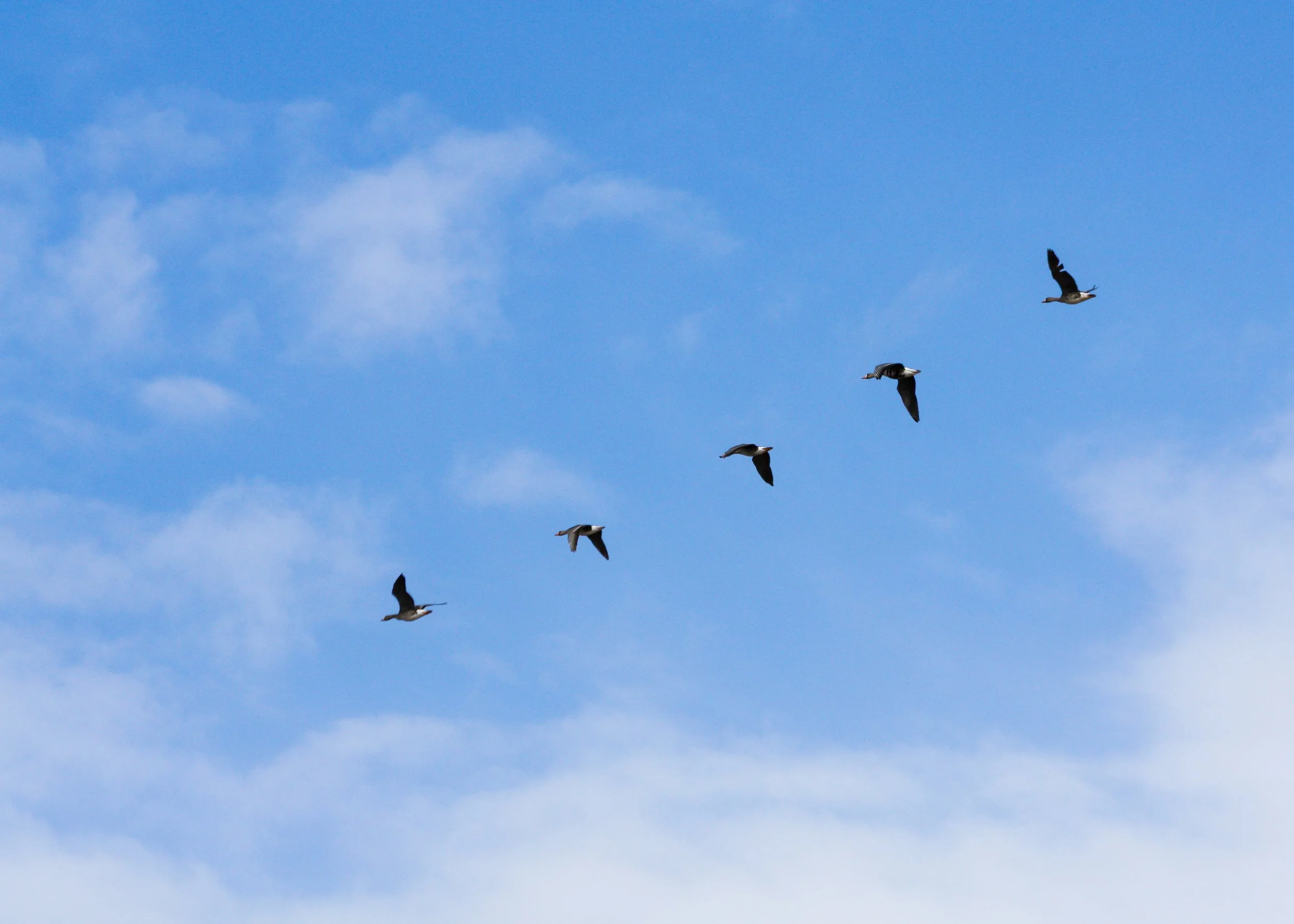
It was 11:30 am and time for the highlight of the trip, a guided bus tour around the Goose Pond property. Around 15 of us excitedly made our way onto the mini bus and off we went. Faces were glued to the windows, scanning the skies and fields for any birds to be found. A couple handfuls of Sandhill cranes were spotted early on, using their long bills to probe around the corn fields where they foraged. Our first stop on the tour offered a view of Snow geese coming in for the landing in a marshy plot, a flock of several hundred that would be just a small taste of what was to come. We stopped again at a station where some volunteers for the event had spotting scopes set up for our viewing. Stepping out of the bus, I was greeted by what had to have been the largest gathering of birds I’ve ever seen in my life. Snow geese filled the air in the tens of thousands, a truly remarkable scene like nothing else. Someone said the count was estimated to be over 50,000 geese, an almost unfathomable number of birds to see before you. The mass migration of animals is something that feels almost miraculous to witness, and getting to share the moment with a person you love makes it all the better. Back on the bus, it was just a couple of minutes down the road to the visitor’s center. Not much was different since being there a couple hours earlier, except for the sound of Chorus frogs now calling from the wetlands below. An overcast sky gave gloomy vibes to the final stretch of the tour, but it was then we saw the greatest variety of species: a Rough-legged hawk, Greater white-fronted geese, Northern shovelers, Ring-necked ducks, Tundra swans, along with some unidentified waterfowl; the last two species named being a couple more lifers for me — the perfect conclusion to this outing.
Returning to Humphrey’s Park, we debussed and headed back inside the main building. Last on our agenda was to wander around the craft fair and display tables before heading home. The Hoosier Herpetological Society had a large booth set up, displaying reptiles and amphibians from members’ collections. I recognized everyone there, having been a member myself previously. We hung around to talk with the group’s leader, Jim Horton, while Amanda had the opportunity to hold a Bearded dragon he had brought along. A neighboring table had taxidermied bird and mammal specimens lined up across the entire surface, so you know that was where I wanted to go next. The art of taxidermy has always fascinated me, leading to a conversation about the animals themselves and the preservation techniques used to keep them around for decades. An International Crane Foundation table was here as well, providing yet another chance to talk to my fellow Craniacs. My favorite booth at the craft fair belonged to an early-on friend of Ecology Amateurs: Blue Aster Studio. The wonderfully talented artists, David and Jennie Orr, create beautiful stickers, magnets, art prints, and more from original designs inspired by their love for native plants and wildlife. I’m a sucker for stickers and had to buy a couple of them, along with an adorable magnet commemorating the festival. Plenty more artwork and handmade crafts were available from other vendors; paintings, soap, birdhouses, and crocheted items all for sale.
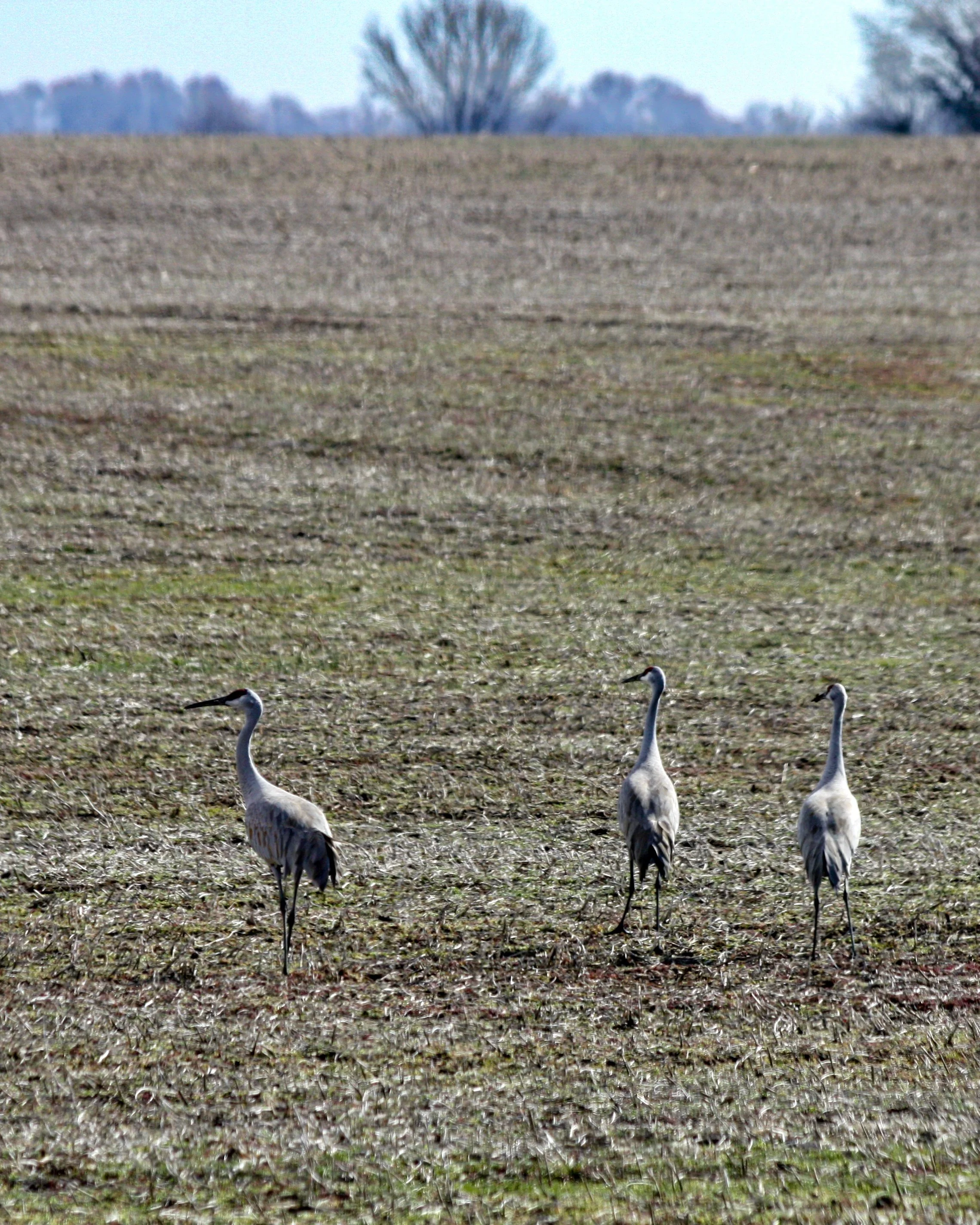
By 2 pm, we were ready to begin the return trip home. This car ride was more low-key, the day’s events having consumed most of our energy, and there were no enormous flocks of geese or cranes to capture our attention this time. In fact, I managed to fall asleep curled up in the passenger seat, thankful that Amanda offered to drive on the way back. Two hours later and home once again, you may think that’s where the birding ended. A familiar call resonated from the sky, the unmistakable karrooooo of Sandhill cranes flying overhead. Through the magic of taking pictures and reviewing them later, I was able to count out 226 cranes on the way to their roosting grounds for the evening.
Marsh Madness 2026 was an informative and momentous experience; thousands of birds seen, multiple new lifer species, and memories made with my partner — I couldn’t have asked for a better day of birding.
Check out these links to the organizations and businesses mentioned in this blog post: