

Why do Birds Migrate?



Following Food, Climate, and Ancient Evolutionary Maps
When you see a V-shaped flock of geese or hear the distant call of a songbird disappearing south, it might be tempting to think, “They’re just going south for winter.” But bird migration is far more complex, a delicate choreography shaped by evolution, environmental cues, and sheer endurance. Birds migrate to track resources, avoid harsh climates, and ensure their survival, and they do it with remarkable precision.
The Drivers of Migration
Migration isn’t random. The primary motivation is resource availability. In temperate and polar regions, winter means fewer insects, seeds, and nectar. Birds move to follow food sources and favorable conditions for breeding or survival.
Day length plays a surprising role. As daylight hours shorten in autumn, birds’ bodies respond with hormonal changes that trigger migratory behavior. Fat stores are built, navigation instincts kick in, and many species enter a state of hyperactivity known as zugunruhe, or migratory restlessness.
Evolution has fine-tuned these movements over millennia. Some species migrate short distances to milder climates, while others, like the Arctic tern, travel incredible distances (over 25,000 miles round-trip) linking Arctic breeding grounds to Antarctic feeding areas. Partial migration adds another layer: some populations within a species migrate, while others stay put, depending on local conditions and survival strategies.
Navigation: Nature’s GPS
Birds navigate with astonishing accuracy using multiple cues.
Stars and celestial cues: Many nocturnal migrants use constellations and the position of the stars to guide direction.
Earth’s magnetic field: Birds detect magnetic fields, allowing them to orient themselves even on cloudy nights or over featureless oceans.
Landmarks and geography: Rivers, coastlines, and mountain ranges serve as natural highways, helping birds maintain their course.
Some species even combine these methods, switching between celestial and magnetic navigation depending on conditions. This multimodal navigation system is a product of millions of years of evolution and fine-tuned instincts.
The Cost of Migration
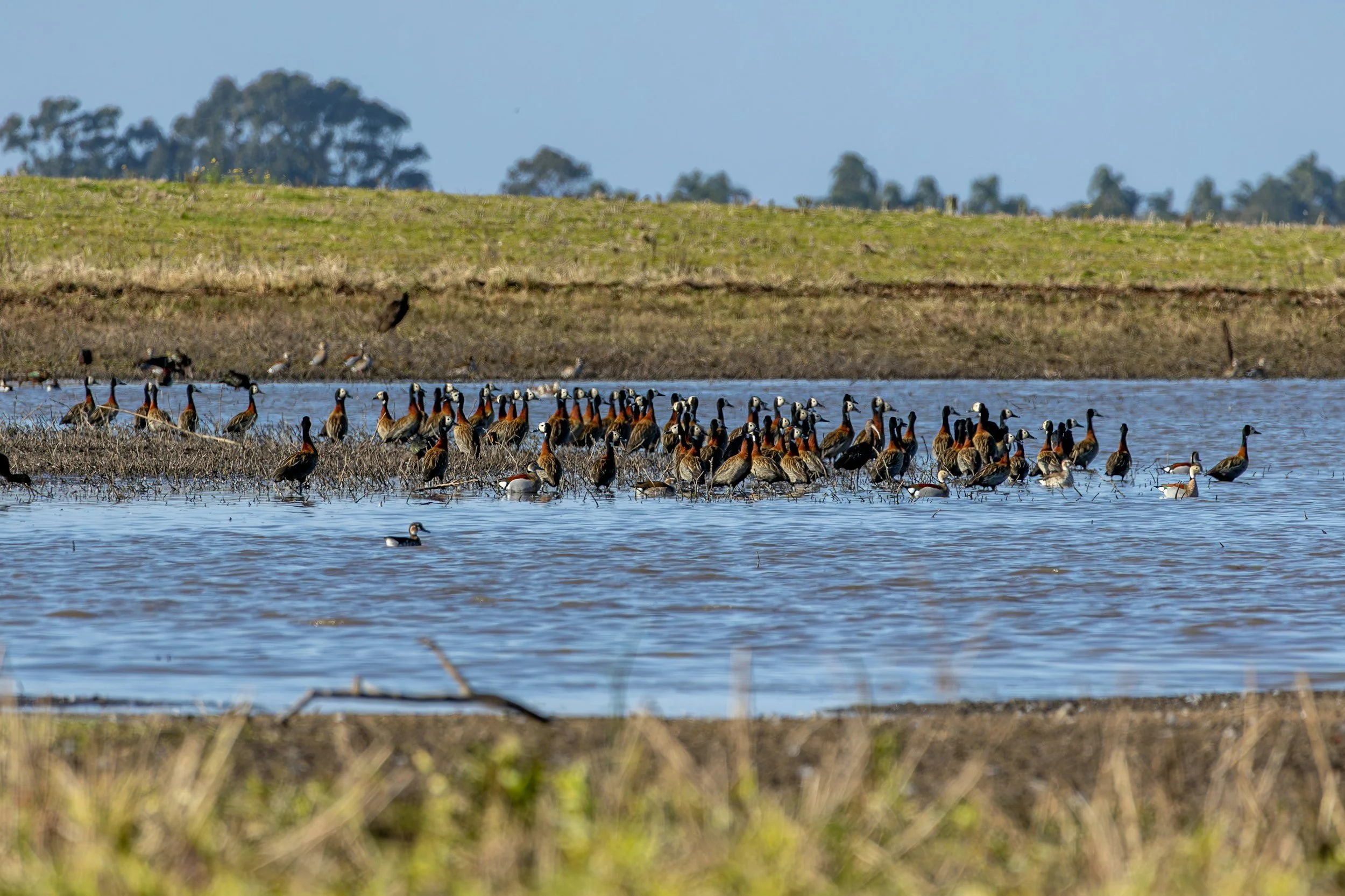
Long-distance migration is one of the most energy-demanding endeavors in the animal world. Birds double their body weight in fat stores to fuel flight, and some fly hundreds of miles without stopping. Stopover sites like wetlands, fields, and forests, become critical refueling stations along these migratory highways.
Climate change is altering the timing and availability of food along these routes. Early springs or prolonged droughts can cause mismatches between arrival times and peak food abundance, disrupting breeding and survival. Migration is an ancient behavior, but it is increasingly vulnerable to a rapidly changing world.
The Takeaway
Bird migration is far more than a seasonal spectacle, it is a complex, energy-intensive strategy finely tuned by evolution. Driven by food, climate, and internal biological clocks, birds navigate across continents using stars, magnetic fields, and landmarks. From short hops to epic journeys like the Arctic tern’s global voyage, migration showcases nature’s capacity for endurance, precision, and adaptability.
Key Terms and Concepts
Migration – The seasonal movement of animals from one region to another to access resources, avoid harsh conditions, or breed.
Partial Migration – When only some individuals of a species migrate while others remain in the same area year-round.
Zugunruhe – A period of migratory restlessness in captive birds, reflecting the instinctive urge to migrate.
Celestial Navigation – Using the stars, sun, or moon as reference points to guide direction.
Magnetic Orientation – The ability of birds to detect and use Earth’s magnetic field to navigate.
Stopover Sites – Key locations where migratory birds rest and refuel during long journeys.
Resource Availability – Access to food, water, or other necessities that influence animal movement.