

Purple Martins
Supporting Purple Martins at Home
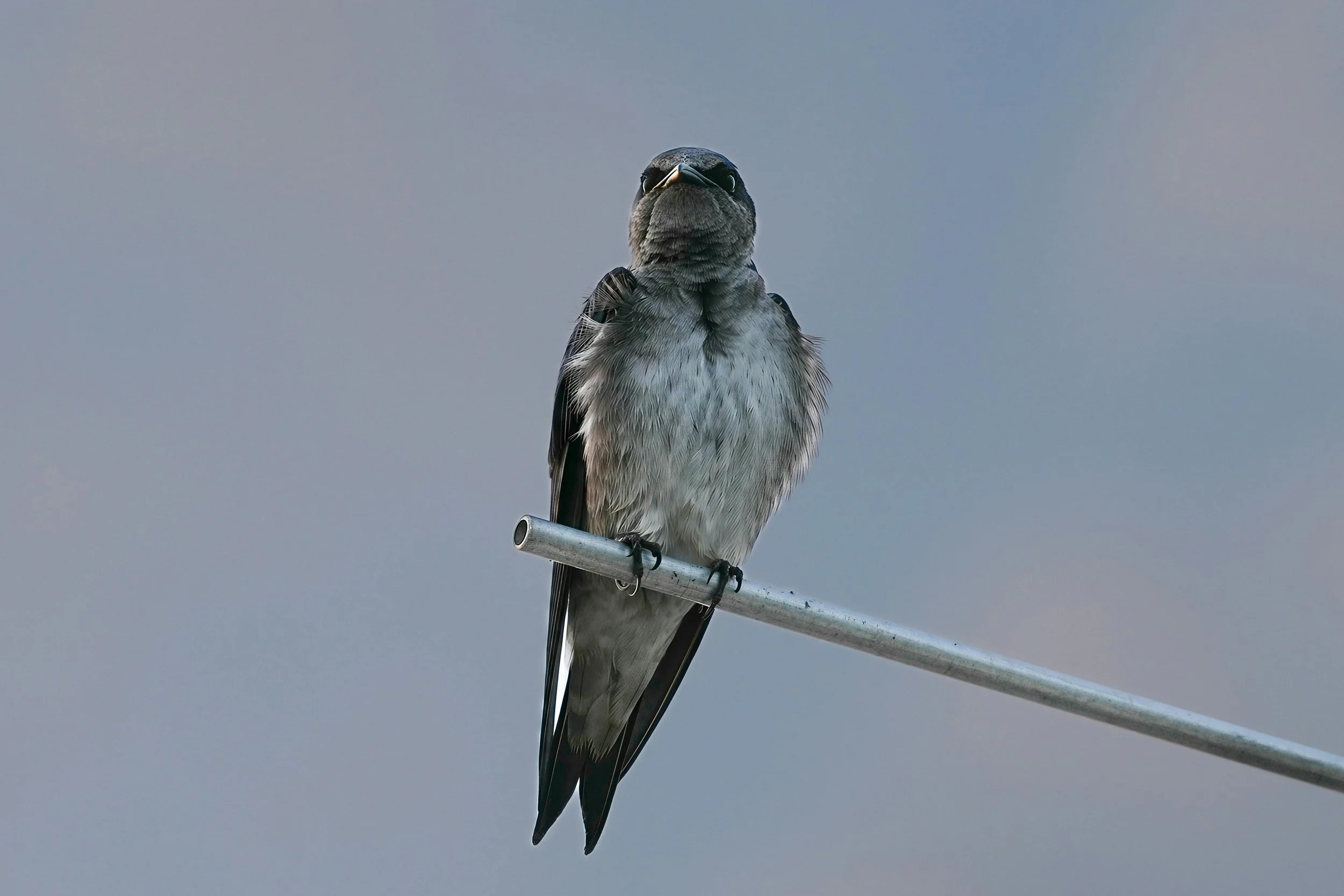
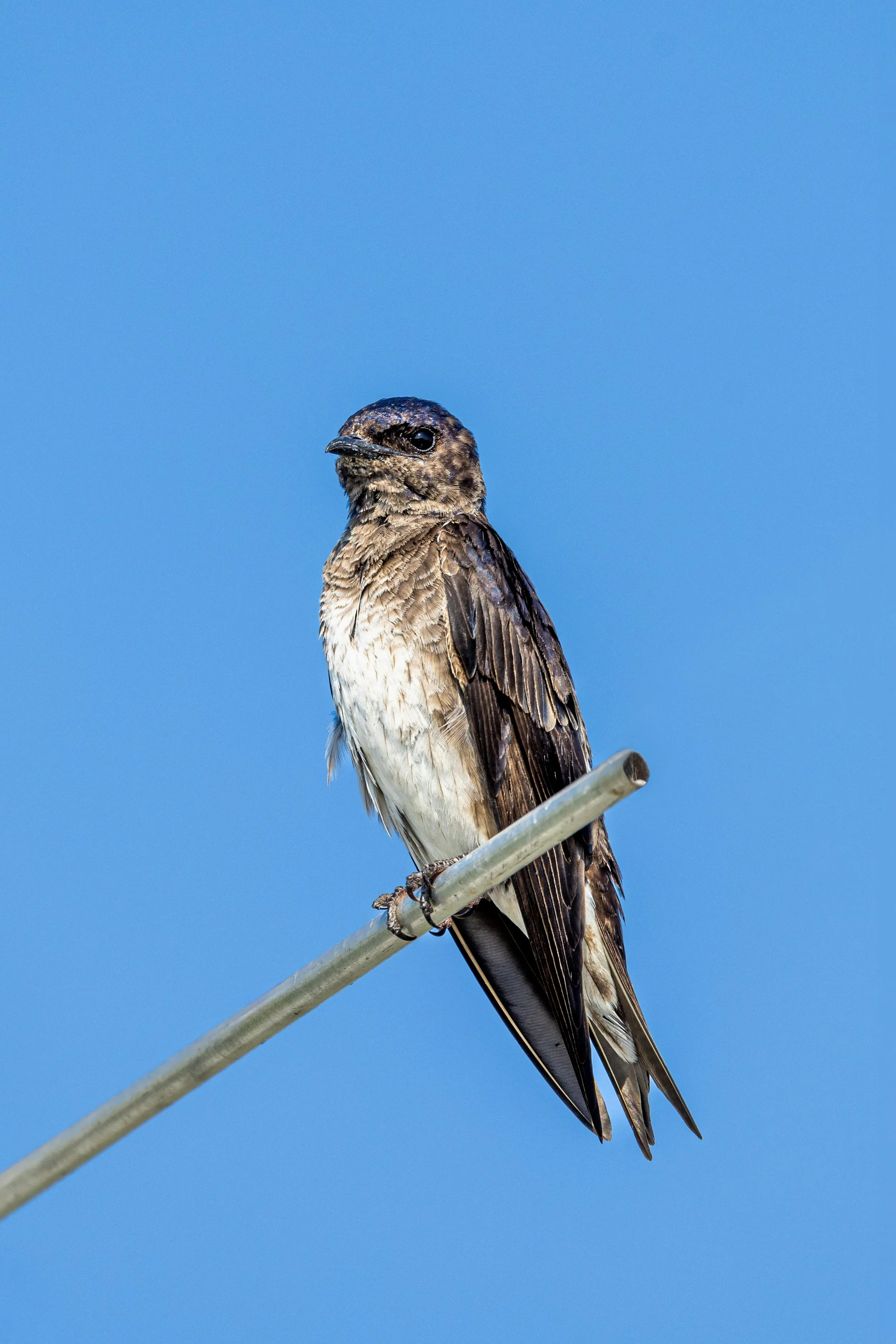
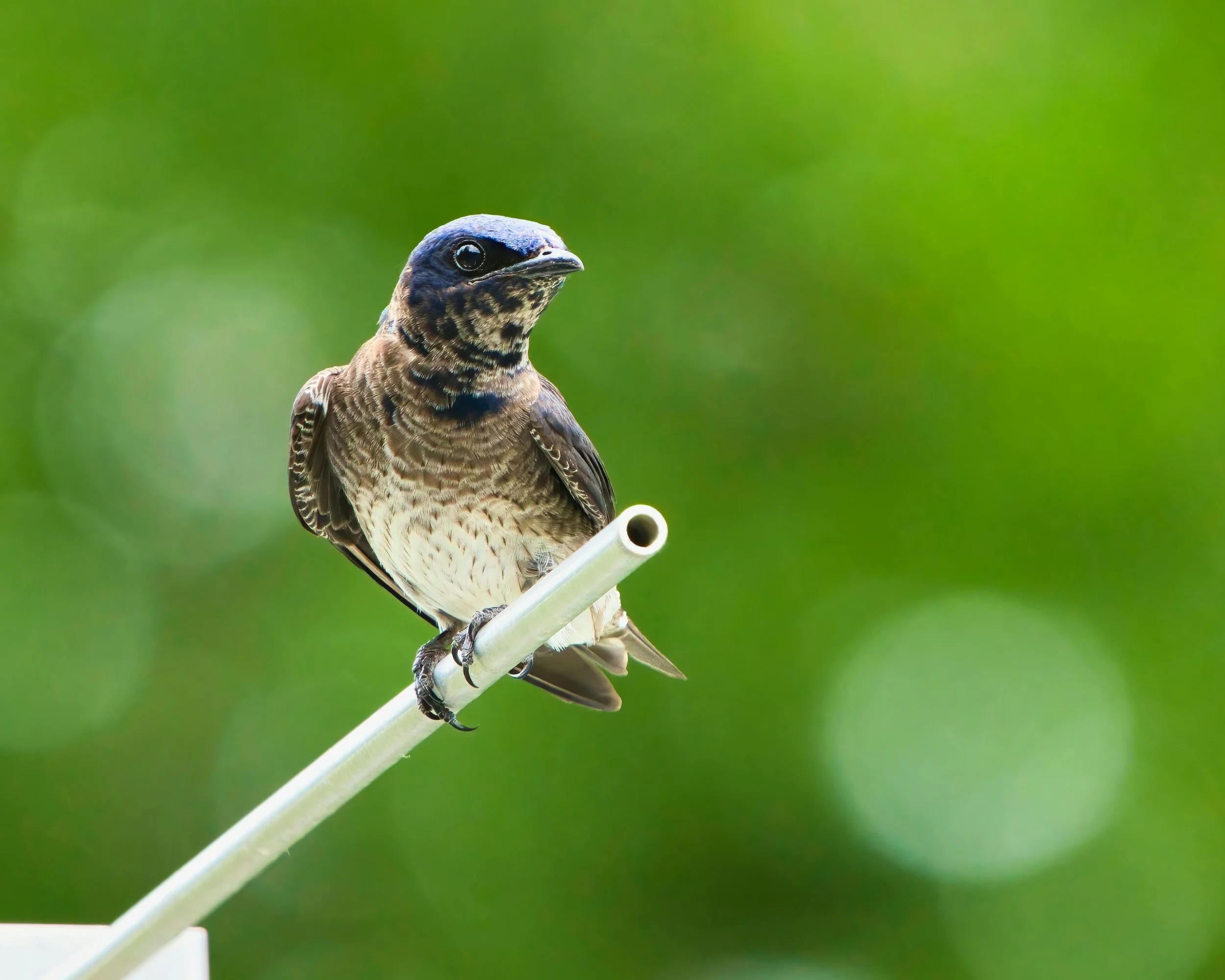
If you’ve ever seen tiny dark birds darting and twisting above your yard in summer evenings, that was probably a Purple Martin, one of North America’s coolest aerial insectivores. These birds are social, charismatic, and incredible at gobbling up flying insects while putting on an airborne show that makes every bird nerd (and backyard wanderer) smile.
But here’s the twist:
Purple Martins east of the Rockies depend almost entirely on humans for their nesting homes. Without people putting up special housing, these birds struggle to find safe places to raise their young.
So if you’re ready to help these acrobats thrive and turn your yard into martin central, here’s the deep, friendly guide you’ve been asking for.
Find the Right Spot: Location Matters More Than You Think
Purple Martins have very specific real estate tastes.
A big open space where martins can glide easily.
No trees or tall obstacles within at least 40–60 feet of the housing.
Housing placed 30–120 feet from your house (martins like being near people, weirdly).
Preferably close to water (ponds, lakes, streams) because bugs hang out there too.
Think wide open field vibes, not dense hedge rows. If your yard is too wooded or narrow, you can still help by volunteering at nearby parks, schools, or community gardens with better space.
Ecology Amateurs tip: pick somewhere you’ll enjoy watching from a distance, martins are best admired with binoculars and lemonade, not from underfoot.
Hang the House: Choice of Nesting Setup
Purple Martins are colonial, which means they want neighbors.
Single birdhouses aren’t much help, these birds want community condos.
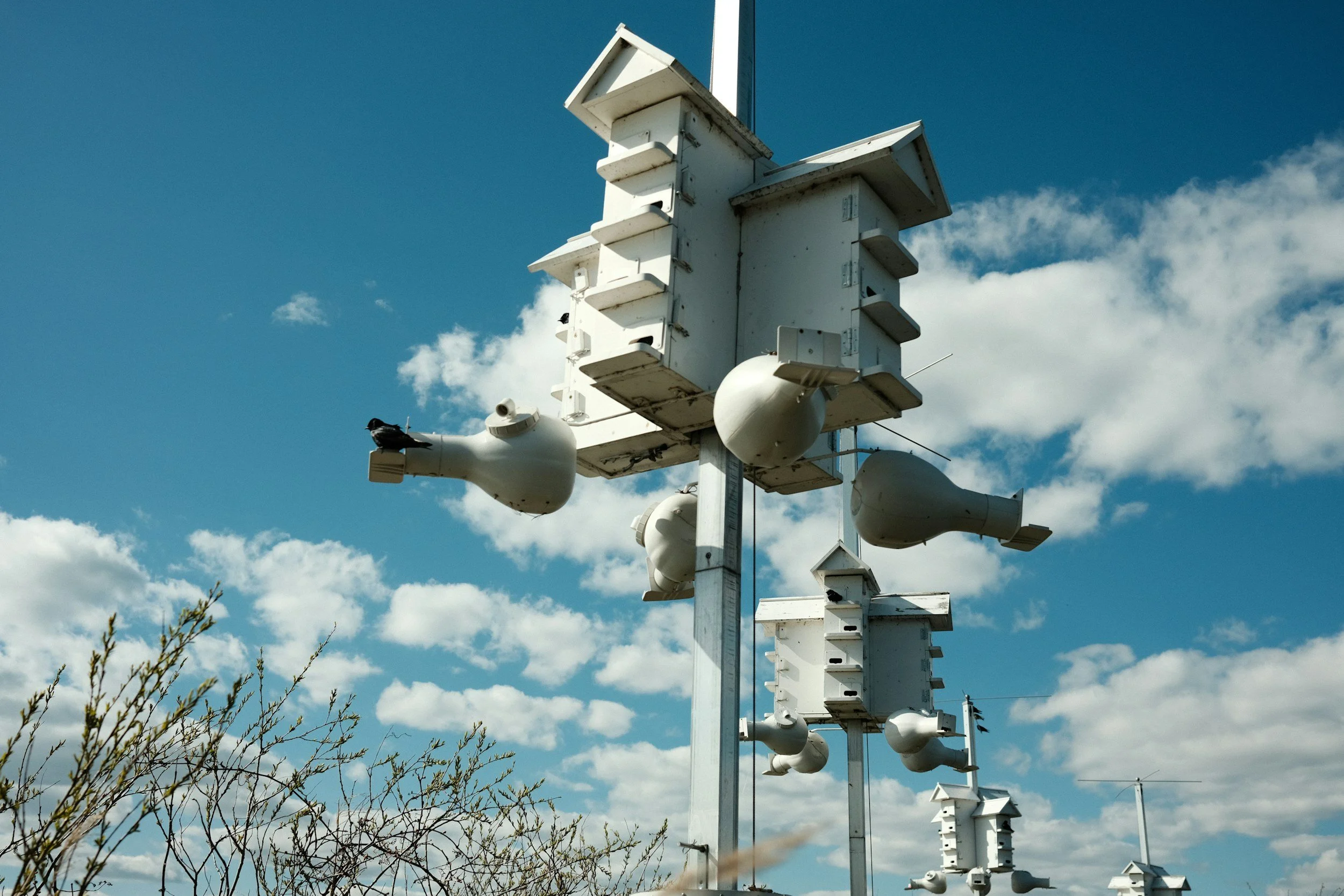
➤ Gourd Racks
These big gourds with cut-out entrances feel cozy and natural to martins, and they’re classic.
➤ Multi-compartment martin houses
Like apartments, but for birds. Each compartment is a nest “unit.”
➤ Mixed systems
Some hosts use gourds and houses to make their site look extra appealing.
Important structural stuff:
The box or gourd needs to be raised and lowered on a pole so you can do checks and cleanouts.
Cavities should be around 6" × 11" or larger, so birds have enough room.
The houses should be white: it reflects heat and keeps nestlings cooler in summer.
Ecology Amateurs Tip: start with at least 4 cavities: martins love neighbors, and more nesting holes = more attraction.
Timing: When to Set Up and Open the Doors
Purple Martins migrate long distances. They arrive back on breeding grounds in spring, sooner in southern areas, later in northern ones.
Put the housing up early, before the martins return.
Keep entrances closed at first to keep other birds (like house sparrows or bluebirds) from claiming spots.
When you start seeing martins in your area, open the entrances so they can explore your site.
Patience is part of the martins’ charm; some houses take a year or two before birds commit. Don’t be discouraged if Year 1 is quiet.
Fun Ecology Amateurs fact: martins tend to return to successful sites year after year due to “site fidelity.” Once they pick your place, they really pick your place.
Daily Life at the Colony
Once Martins start nesting:
Adults bring insects back to feed their young in each compartment.
You’ll hear a chorus of chatter and chirps from the colony; it’s like feathered background music.
Nest checks (done gently in the afternoon) help you make sure everything’s going well.
Nest monitoring isn’t just helpful, it’s fascinating science. Many hosts participate in citizen science programs that track nesting success and migration patterns.
Watch Out for Pesky House Guests
Bird housing is like real estate… sometimes squatters show up.
Good neighbors
Native species like Tree Swallows or Bluebirds might want a room. You can help by setting up alternate nestboxes nearby so martins aren’t pushed out.
Bad neighbors
Non-native House Sparrows and European Starlings will aggressively take over martin housing and won’t let go. Hosts often use traps or removal to protect martins.
Just remember: building community doesn’t always mean hosting everyone who shows up!
Predator Proofing and Maintenance
Purple Martins face threats from predators like:
Hawks and owls
Raccoons
Snakes
Predator guards around the pole and cages in front of housing entrances can help keep babies safe.
And a clean house is a happy house:
After the season ends, clean out old nesting material.
Winter storage or repairs can help housing last longer and be more appealing year after year.
Food and Water: Give Them What They Need
Purple Martins eat flying insects! Not seeds, not bread, so skip bird feeders for these guys.
They thrive where insects are abundant: around water features, meadows, and gardens with lots of native plants.
If insects are scarce because of weather (cold, wet springs), some hosts even offer supplemental treats like mealworms or crickets.
A shallow water source nearby also helps martins stay hydrated, and gives you another chance to watch them in action.
Why This Matters
Purple Martins aren’t just backyard entertainers; they’re a species that literally relies on us for nesting habitat, especially in the eastern half of the continent. Hosting Martins means you’re putting yourself in the front row of an ancient migratory dance while doing real conservation work.
Every nest checked, every open cavity, and every successful fledgling is a win for biodiversity, and a reason to keep your summer nights filled with fluttering wings and happy chatter.