

Wood Ducks
Supporting Wood Ducks at Home
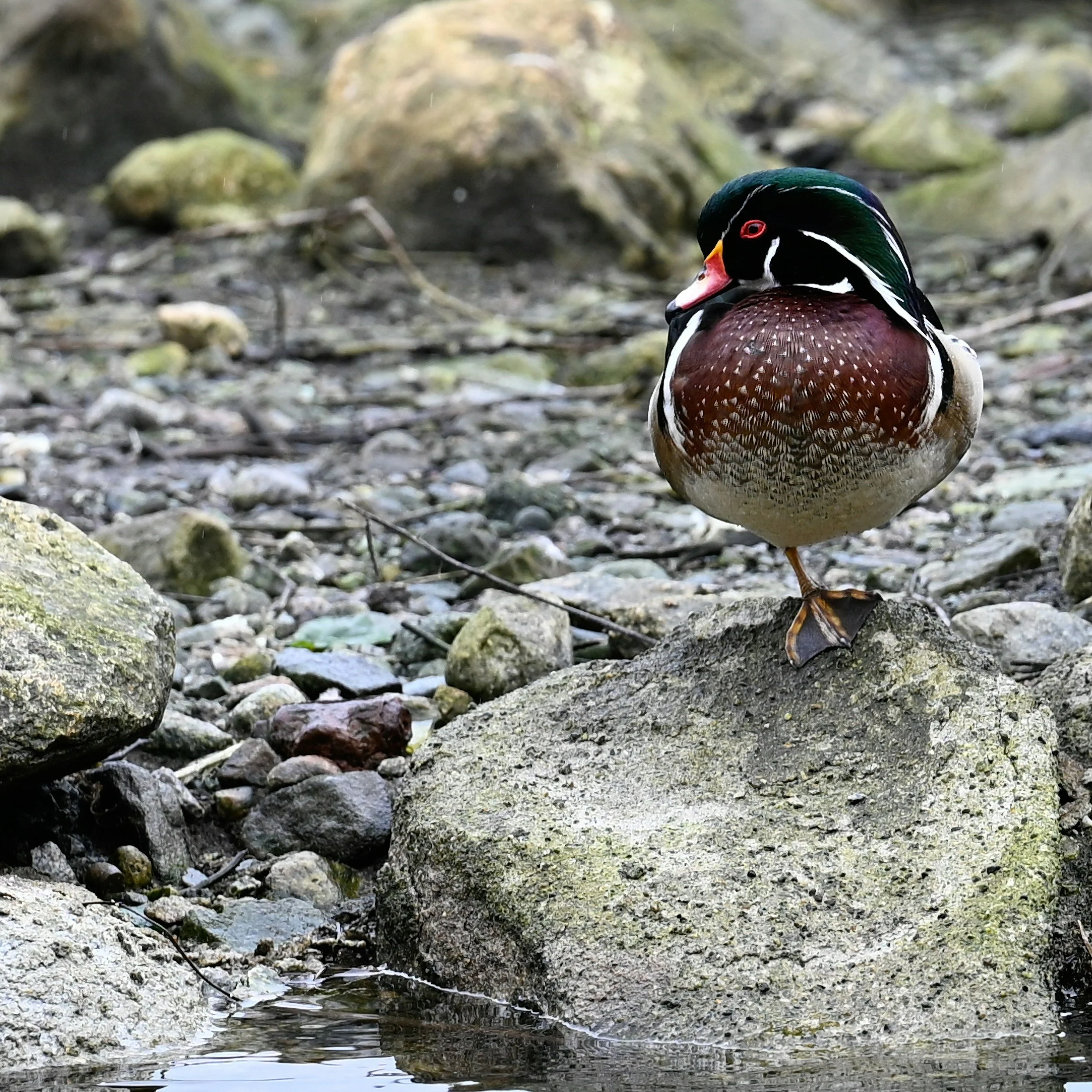
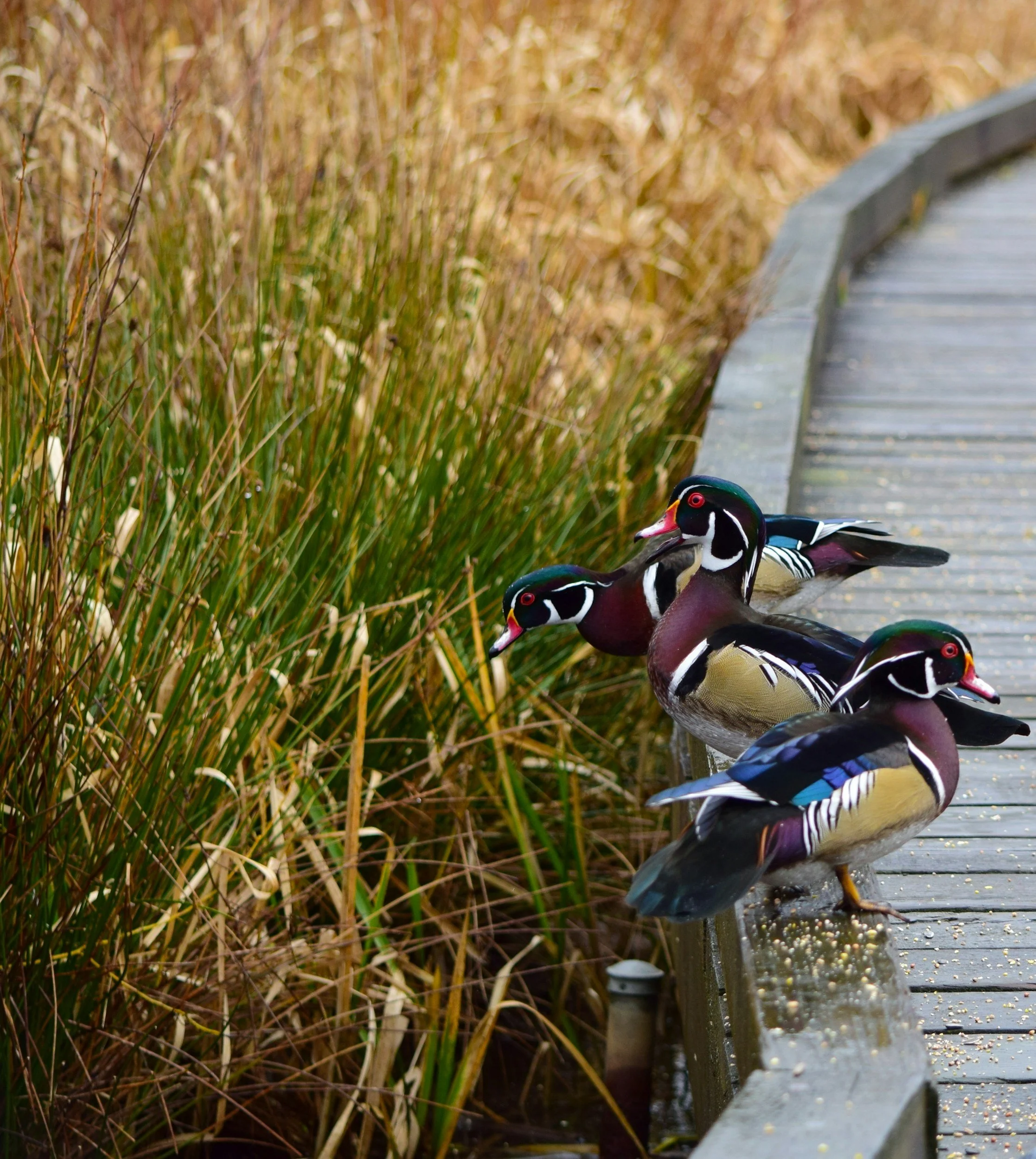
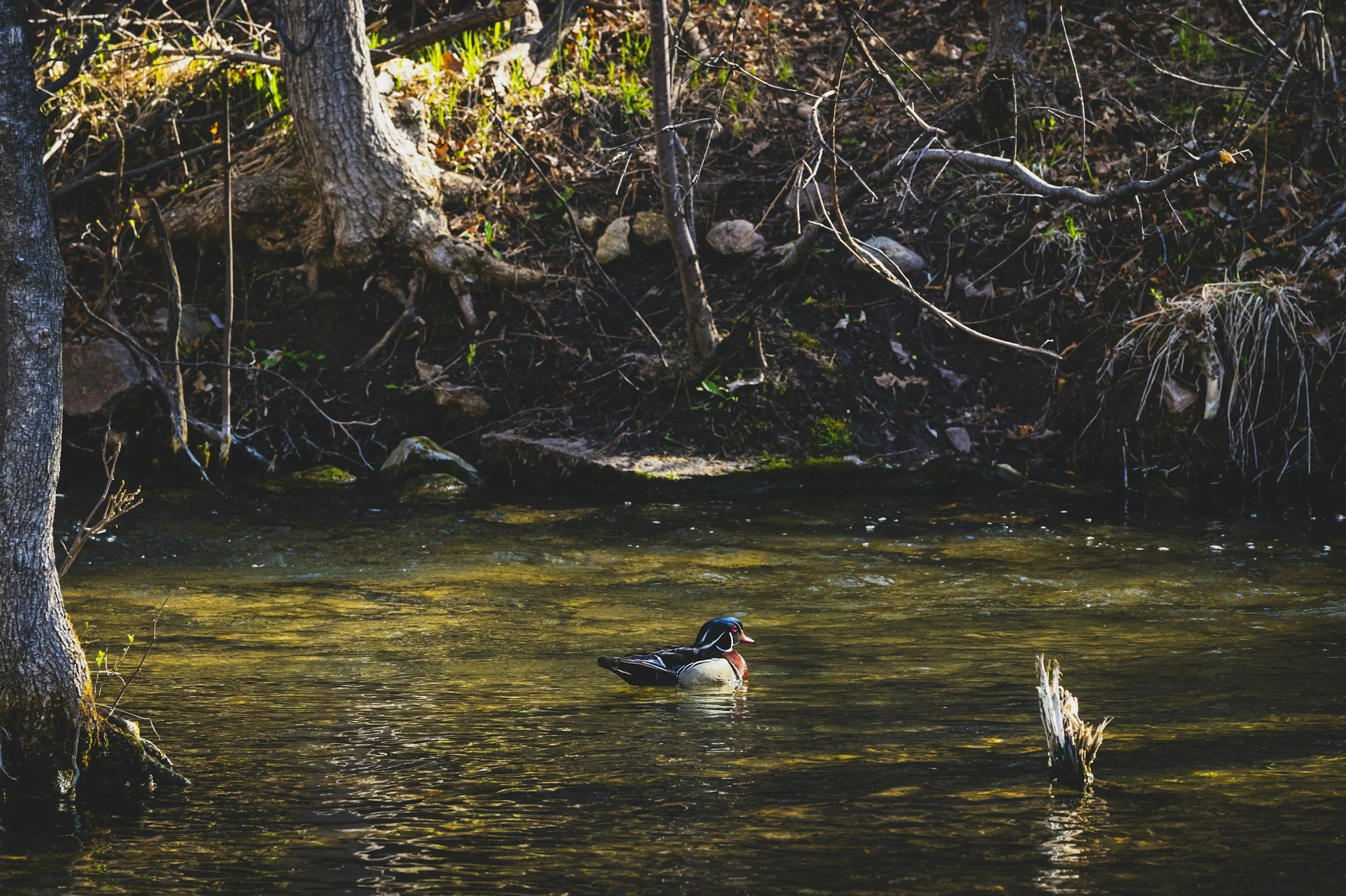
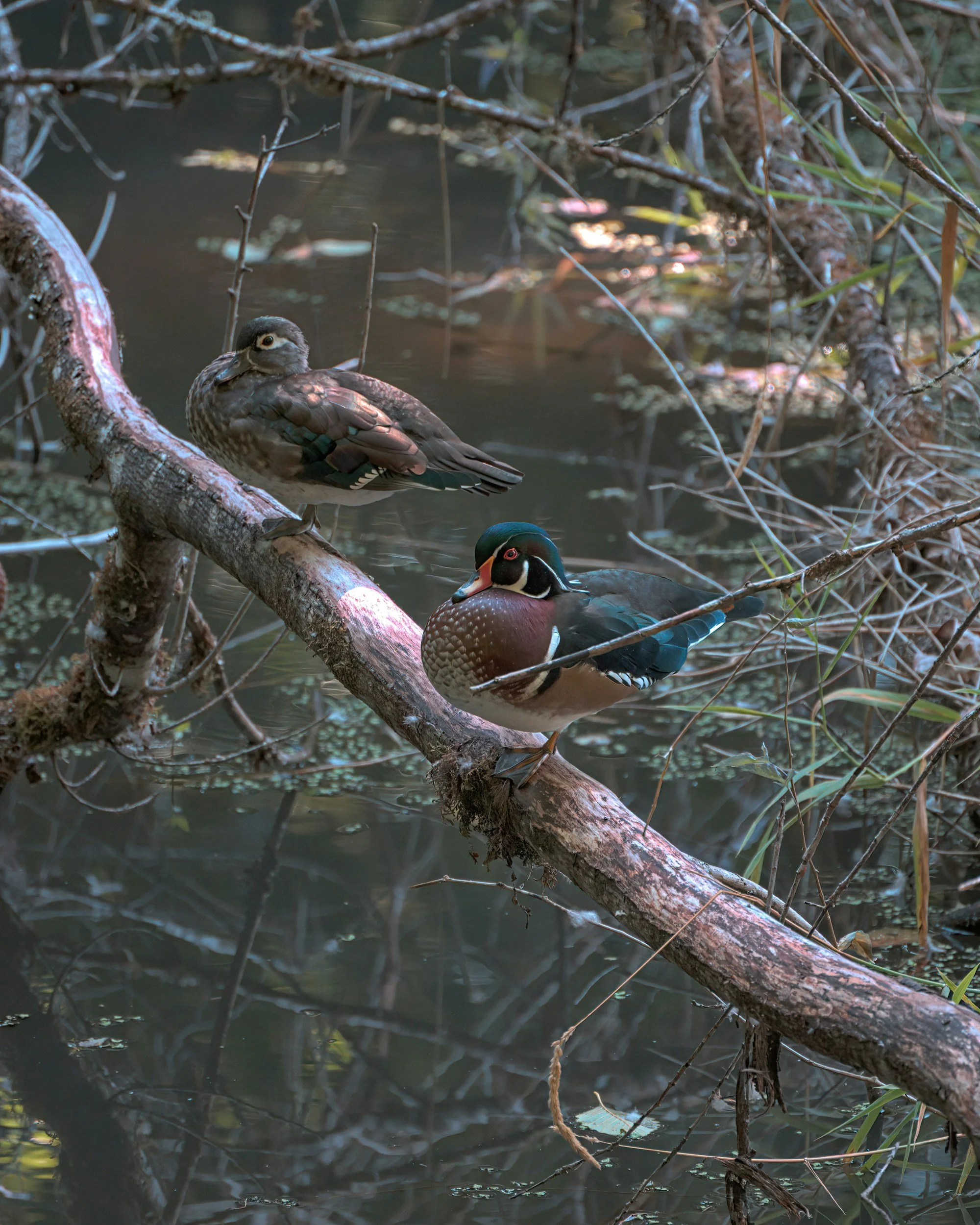
Wood ducks (Aix sponsa) are one of North America’s most striking waterfowl! Males sport iridescent greens, blues, and purples, and females show elegant, softer patterns. Unlike your typical open-water ducks, wood ducks are forest-adapted cavity nesters, meaning they raise their young in tree holes near water or in nest boxes put up by people. Ecology Amateurs fact: Wood ducklings are born ready to jump. After hatching, they climb to the entrance of their nest, leap out (sometimes from high above water), and scramble straight into duckling mode. It’s intense, adorable, and surprisingly safe for them.
Why This Matters
At the start of the 20th century, wood ducks teetered on the brink of extinction due to habitat loss and over-harvesting. Thanks to legal protection and habitat work (including nest boxes), populations rebounded significantly.
But here’s the catch wildlife experts emphasize: natural nest cavities are limited, and wood ducks love them. That’s where you can make a real difference.
Step 1: Water + Trees + Bugs
Wood ducks live in places that give them everything they actually need:
Water like ponds, slow marshy edges, swamps, beaver ponds, or shallow waterways
Trees and shrubs for shelter and natural food sources
Vegetation and invertebrates that support the duckling and adult diets
These habitats support aquatic plants, seeds, insects, and other food that wood ducks eat through spring and summer.
Your yard doesn’t need to be a huge wetland to help; even small ponds or riparian features along a creek paired with leafy buffers and native plants invite wood ducks to hang around and forage.
Step 2: Build a Wood Duck Nest Box
Here’s what wood duck boxes should provide:
A dry, predator-protected cavity for nesting
A stable mount on a pole or tree near water or in wooded wetlands
A layer of wood shavings for bedding and egg lining (about 4–6 inches)
A predator guard to keep raccoons, snakes, and other threats at bay
Boxes made from rough-cut lumber seem to work best because ducklings can climb out easily. Plastic or metal structures need ladders inside to help the kids get out.
Pro tip from folks in the field: rough interior wood mimics the feel of natural tree cavities and gives ducklings traction as they prepare to jump.
Step 3: Place Your Box Like a Pro
Set boxes near water, wetlands, marsh edges, beaver ponds, or slow streams
Mount on poles, sturdy posts, or trees 4 to 6 feet above water or ground
Face the entrance hole toward the water when possible
Clear flight paths to the entrance so ducks can come and go easily
Avoid placing boxes where branches let predators sneak onto the box
Make sure it’s convenient for annual maintenance (cleaning and prepping)
Dead trees over water make excellent natural mounting points when available, but poles with predator guards are a great alternative too.
Step 4: Maintain for Long-Term Success
Clean the box yearly to remove old nesting material in late winter or fall
Replace fresh wood shavings before nesting begins
Don’t peek during spring or summer, as disturbance can cause abandonment
If you don’t see ducks using the box this season, don’t get discouraged, many boxes get used in future years once woodies discover them
Boxes can become traps if left full of old debris or unprotected from raccoons, snakes, or starlings, so maintenance helps both ducks and future bird residents.
Diet 101: What Wood Ducks Actually Eat
Wood ducks are not picky eaters, but they do prefer a mix of:
Seeds and nuts (like acorns)
Aquatic plants and their seeds
Insects and invertebrates, especially during the breeding season
Plant material near water edges
This adaptability helps explain why they can thrive in forested wetlands, beaver ponds, and well-vegetated water edges alike.
Why It’s Worth It
Helping wood ducks at home is light conservation with a big impact.
You’re stepping into a legacy that literally saved a species from extinction, and you get the bonus of watching one of the most colorful ducks in North America use your habitat year after year.
With some habitat love, thoughtful nesting boxes, and a bit of patience, your backyard can become a wood duck breeding hotspot, a mini wetland stage where nature’s dramas unfold every spring.