

ZEW Symposium 2026
There’s something a little surreal about sitting in a room full of veterinarians, researchers, and wildlife professionals while realizing that every single person there has dedicated their life to understanding animals in ways that most people never even think about.
That was the 2026 ZEW Symposium.
I showed up with a notebook, a zookeeper brain, and a very loose expectation of what I was about to absorb. I left with pages of scribbles that somehow ranged from arterial parasites in moose to the correct way to sedate a penguin without overheating it.
This is not a comprehensive summary. This is what stuck with me.
The Arc of a Career in Wildlife Medicine
One of the first talks that hit me came from Dr. Brian Joseph, who’s worn just about every hat you can in this field. Keeper, consultant, field vet. The kind of career arc that doesn’t move in a straight line, but instead branches out like a river system.
It was a good reminder that there isn’t one “correct” path in this field. Most people who end up doing meaningful wildlife work got there by saying yes to opportunities that didn’t always look connected at the time.
Wildlife Capture Is a Balancing Act
The wildlife immobilization session drilled home something that feels obvious but is easy to underestimate in the field: capture itself is one of the biggest risks to an animal.
Short chases matter. Stress matters. Even how and where a dart is placed matters.
Avoid the chest and abdomen. Prefer hind limbs. Monitor everything.
But the part that stuck most was simple:
Eyes, ears, nose. Use them.
In a world of tools and protocols, your own awareness is still one of the most important pieces of equipment you have.
Parasites, Disease, and Things You’d Never Guess
A huge portion of the symposium focused on disease ecology, and honestly, some of it felt like reading nature’s horror stories.
Arterial worms living in mule deer and occasionally migrating into the brains of moose
Necrosis of ear tips tied to parasite movement
First documented cases of toxoplasmosis causing abortion in bighorn sheep
Elk hoof disease linked to bacterial invasion breaking down tissue structure
The takeaway wasn’t just that disease is complex. It’s that cause of death in wildlife is often not clean or singular. It’s layered. Environmental stress, parasites, bacteria, and timing all stack together.
It makes field identification and management way more complicated than it appears on paper.
Red Wolves and the Cost of Survival
The session on red wolves stuck with me in a different way.
These are animals that were declared extinct in the wild and rebuilt from a tiny founder population. Now hundreds exist under human care, with reintroduction efforts ongoing.
And yet, even under intensive management, something like inflammatory bowel disease is still a major issue.
It raises uncomfortable questions. Are we fully meeting their biological needs? Are there genetic or dietary constraints we don’t fully understand?
One note that stood out was the possibility that red wolves may struggle to digest starch due to low amylase expression. That’s the kind of detail that can quietly shape the success or failure of a recovery program.
Aquatic Medicine Is… Not Chill
If you ever start thinking wildlife medicine is predictable, just look at aquatic species.
Electric fish that can shock you through equipment
Venomous fish like stonefish and lionfish
Cone snails and blue-ringed octopus that can shut down your nervous system
Even handling a stranded whale comes with a checklist of risks, including zoonotic disease and physical danger from the animal itself.
The biggest lesson here was humility. You are never the most dangerous thing in the room.
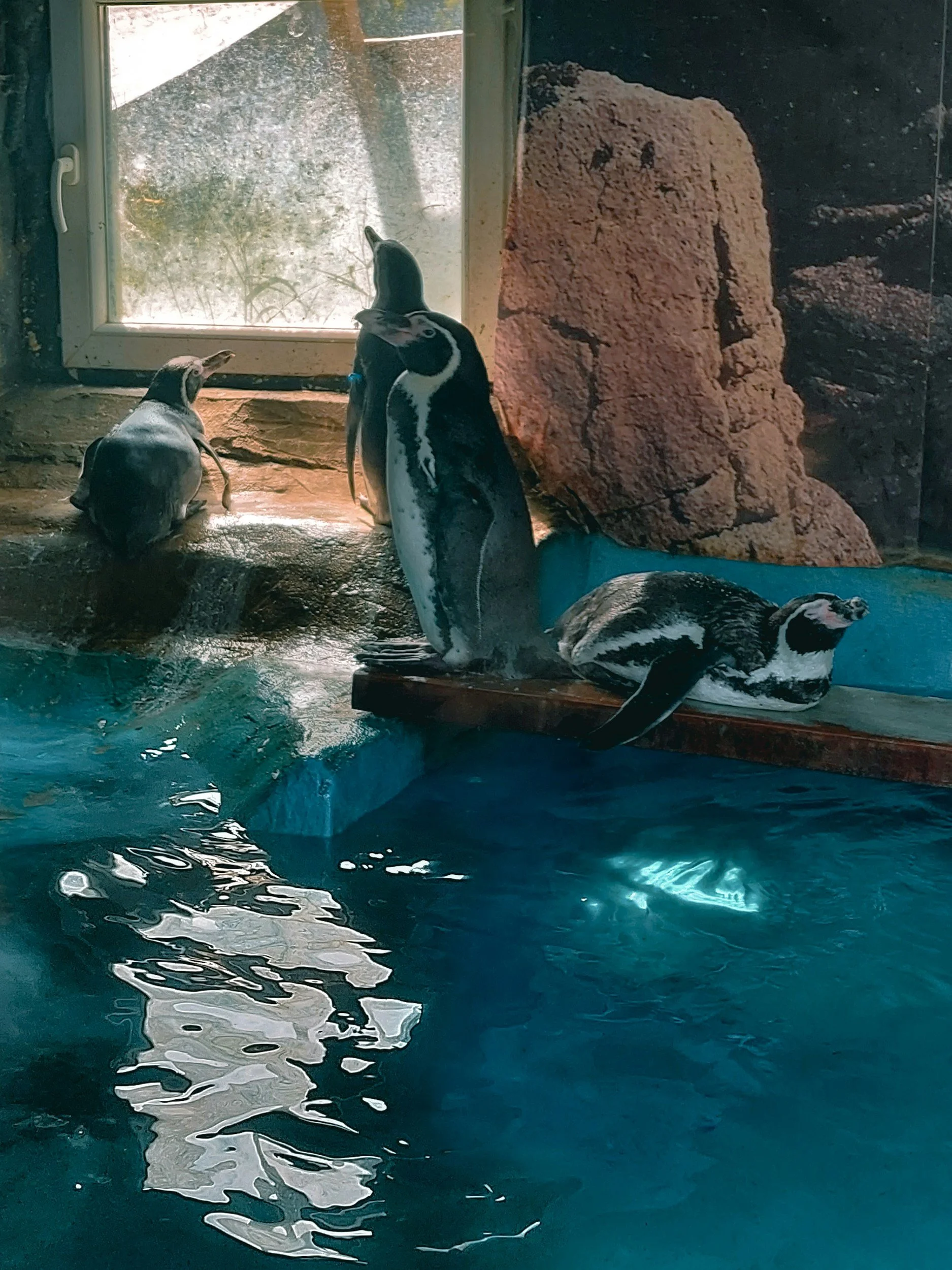
Penguins Are Built Different
There was an entire session on penguins, and it was one of the most detailed looks at species-specific care I’ve seen.
These animals are absurdly specialized:
Dive hundreds of meters deep
Hold their breath for over 10 minutes
Maintain oxygen balance with high myoglobin and hemoglobin levels
Use countercurrent heat exchange in their extremities
And in human care, everything has to match that biology.
Air quality, water filtration, light cycles, social structure, diet quality. Even things like positive pressure systems to prevent fungal infections.
One detail I loved: during sedation, you may need to actively cool them to prevent overheating.
A cold-adapted animal can overheat fast when things go wrong.
Welfare Is Not a Feeling
The welfare investigation talk emphasized something I think more people need to hear:
Good welfare decisions are not based on emotion. They’re based on evidence.
That doesn’t mean compassion doesn’t matter. It means that if you want to advocate for animals effectively, you need documentation, observation, and a full-picture understanding of what’s actually happening.
It’s not enough to feel like something is wrong. You have to prove it.
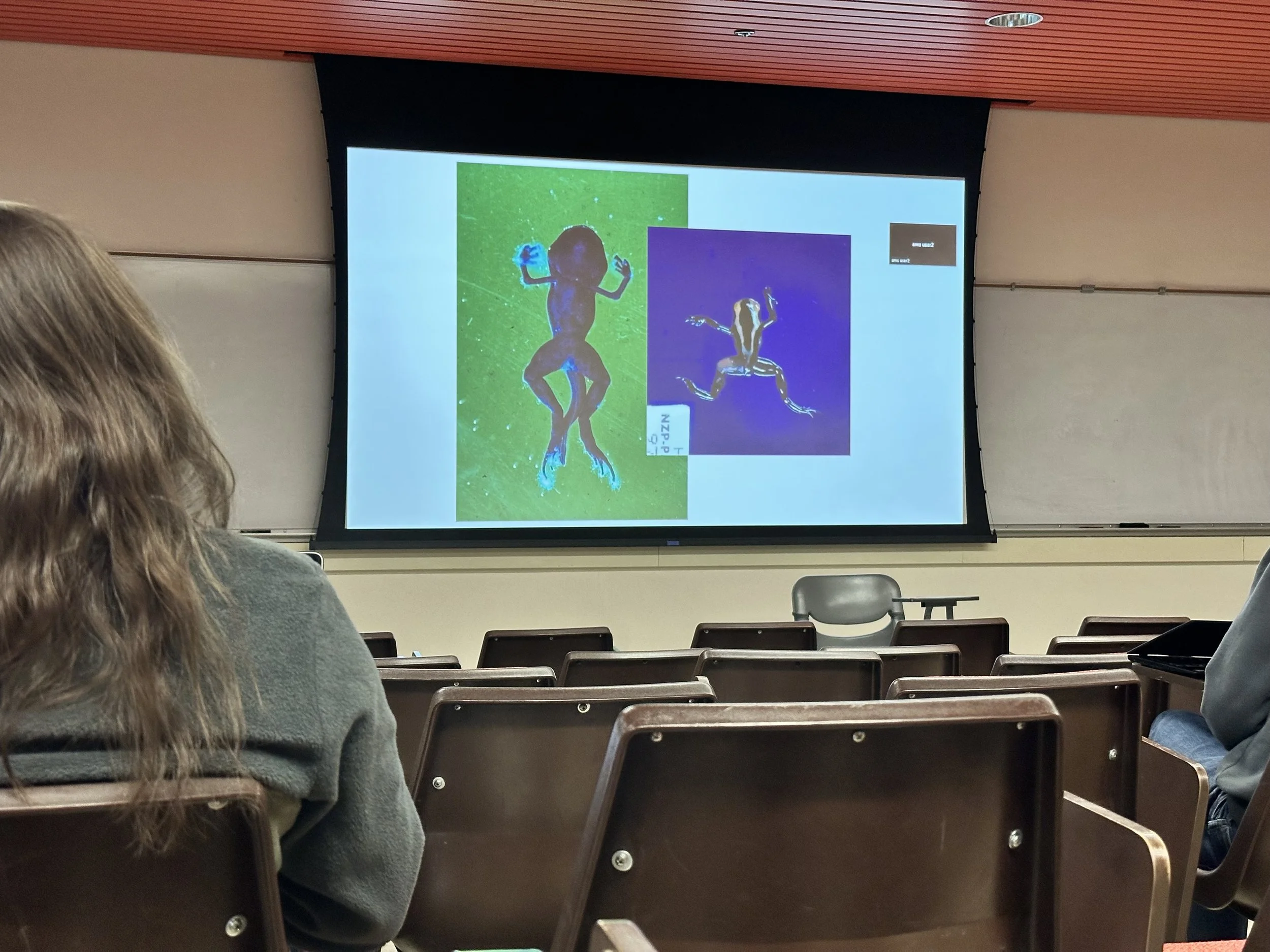
Amphibians: Small Bodies, Complex Problems
Of course, I gravitated toward the amphibian pathology talks.
And yeah, it confirmed what I already suspected:
Everything comes back to water.
Water quality. Electrolytes. Ammonia. Chlorine. Dissolved gases.
When something goes wrong in amphibians, it often starts at the environmental level and then cascades into disease:
Chytrid infections disrupt skin function
Edema from fluid imbalance
Vitamin deficiencies cause tissue changes
Gas bubble disease from supersaturation
One note I wrote in all caps:
“ALWAYS EVALUATE THE SKIN”
For amphibians, skin is everything. Respiration, hydration, protection. It’s not just a barrier. It’s a lifeline.
Reintroduction Is Slow, Messy, and Worth It
The addax and antelope reintroduction work was one of the more hopeful parts of the symposium.
Animals that were once extinct in the wild are now being reintroduced through carefully managed programs. Timing releases with wet seasons, monitoring with telemetry, even acclimating animals in pre-release groups.
It’s not glamorous. It’s slow and controlled.
But it works.
What I’m Taking With Me
I didn’t leave the symposium with a clean set of answers. I left with better questions.
How much of animal care is environment versus genetics?
How often are we treating symptoms instead of root causes?
Where do we still not understand the limits of the species we work with?
And maybe the biggest one:
How do we stay curious enough to keep improving?
Because if there’s one thing the ZEW Symposium made clear, it’s that we’re still figuring a lot of this out.
And that’s not a failure.
That’s the work.
If you care about wildlife, whether you’re a keeper, a student, or just someone who likes flipping rocks and seeing what’s underneath, spaces like this matter. They’re where knowledge gets shared, challenged, and built. And sometimes, they’re where you realize that the weird little details you care about actually fit into something much bigger.