

Ant Societies and Eusocial Life
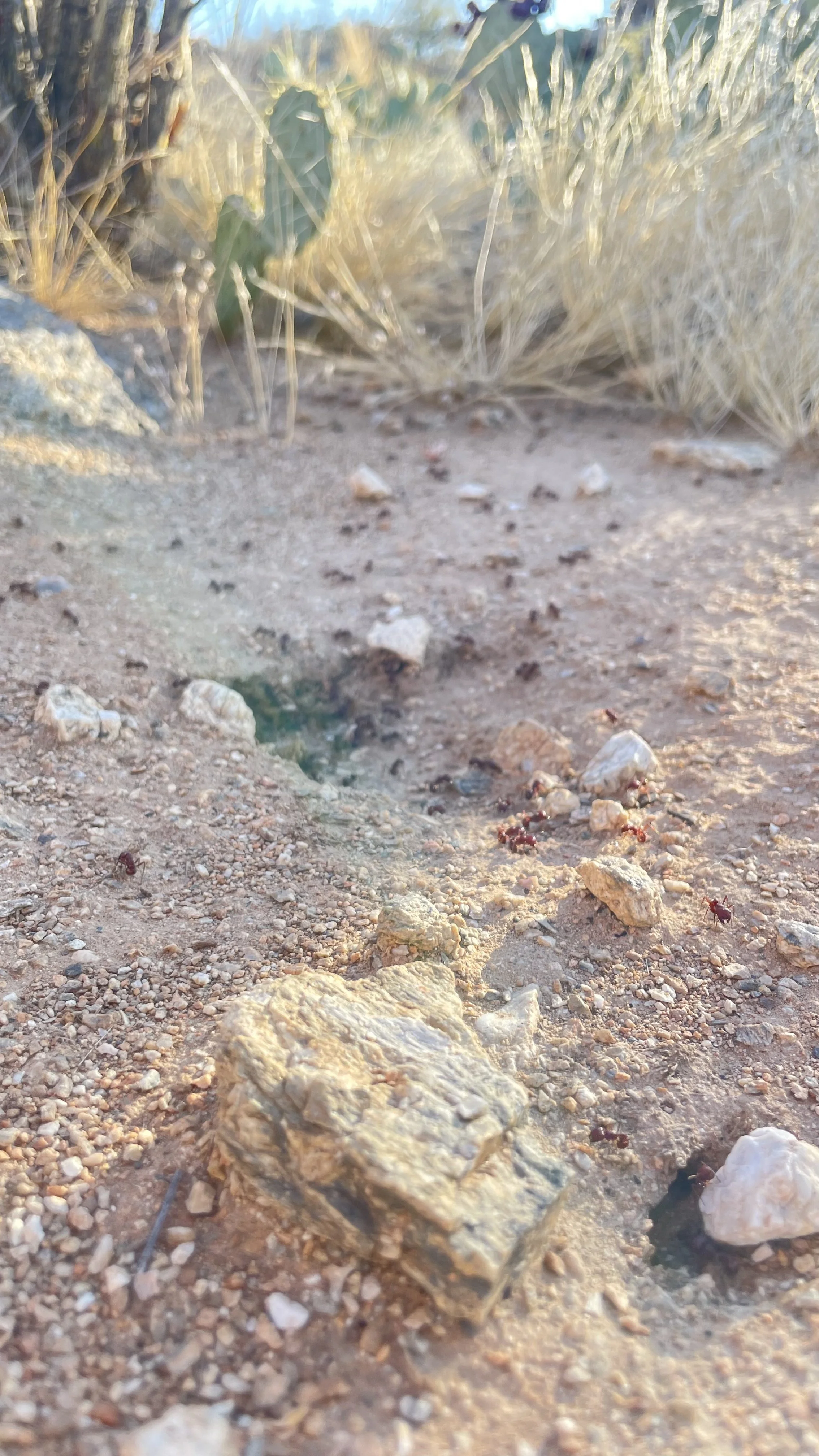
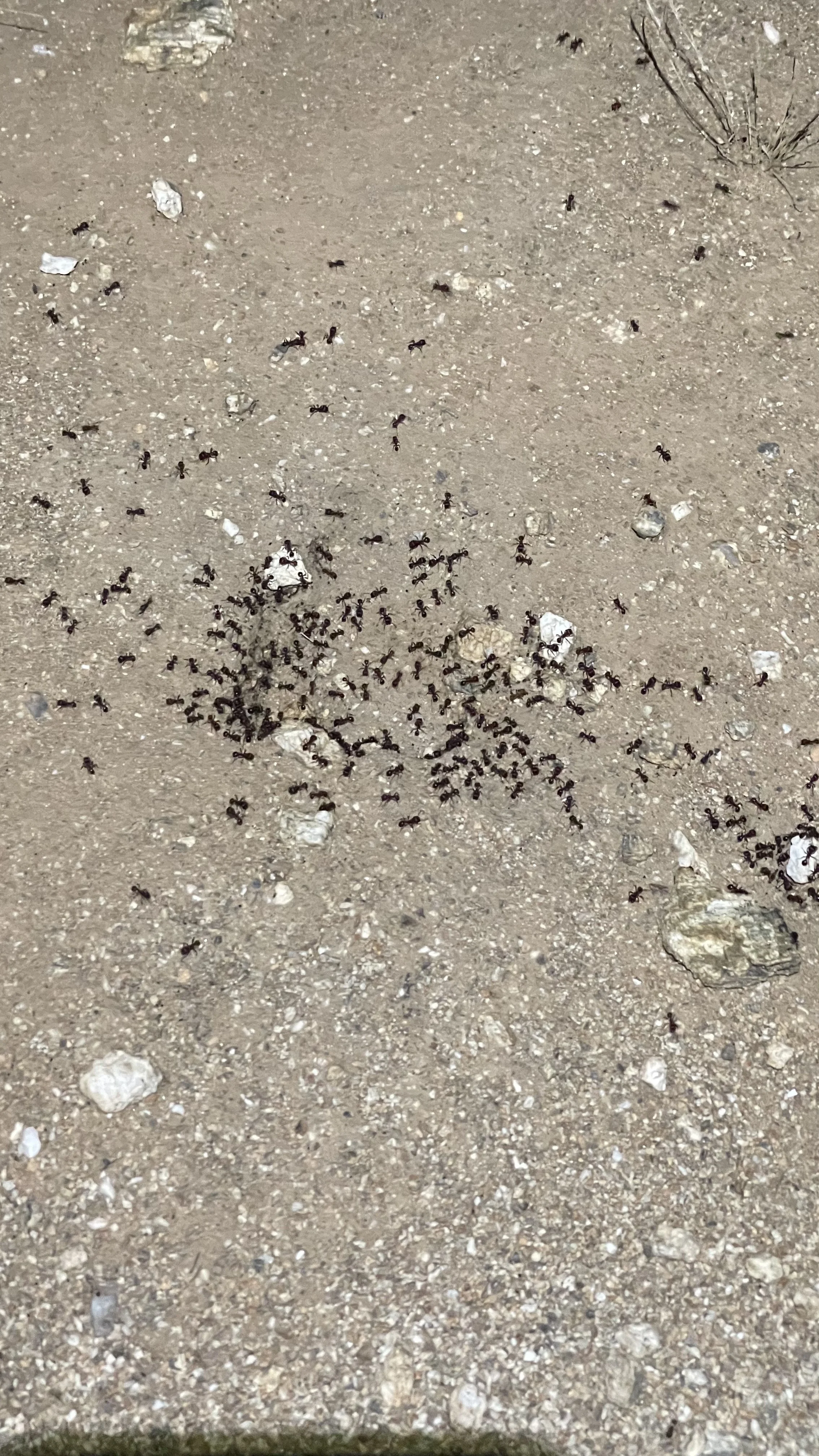
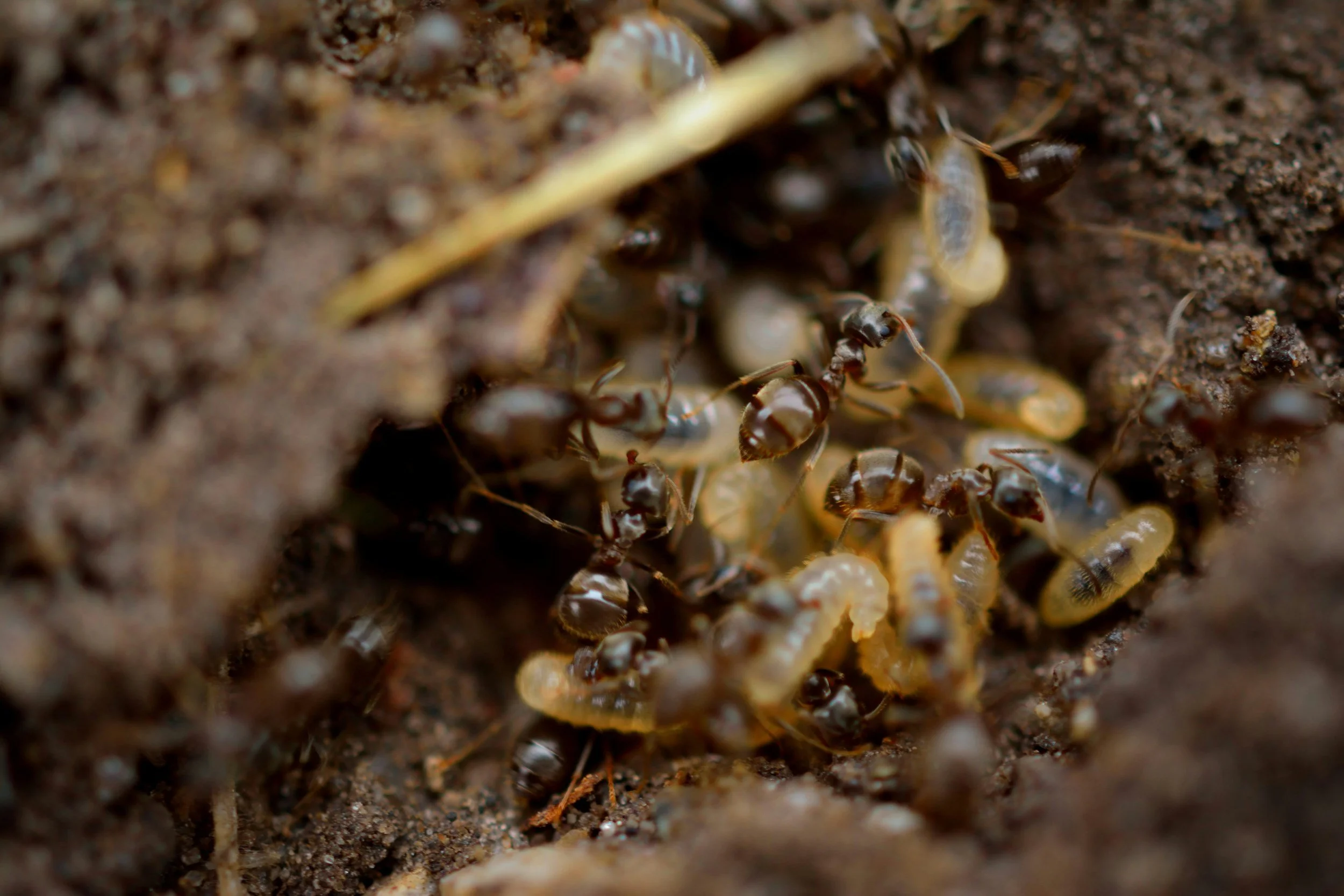
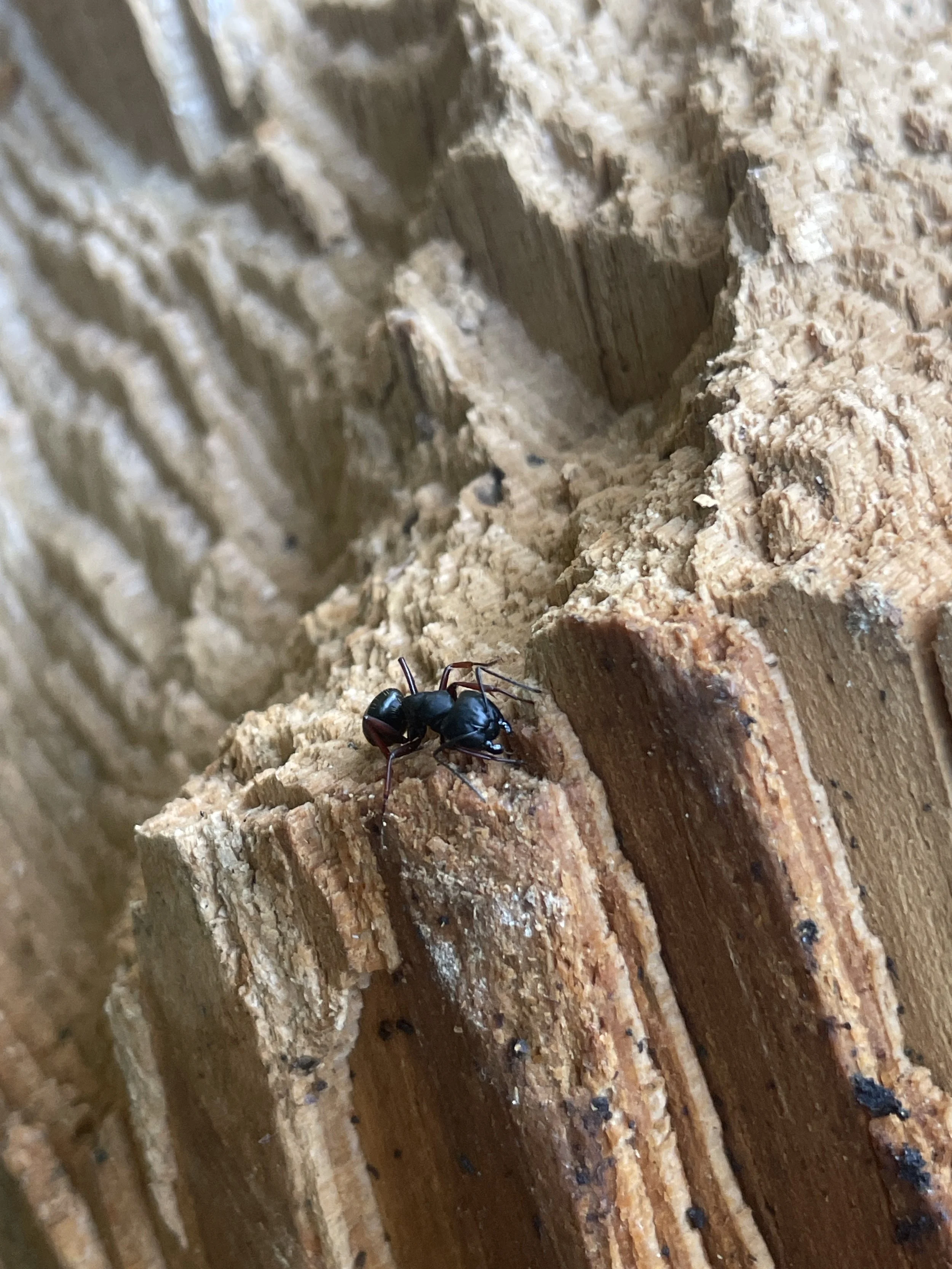
Scientists often describe ant societies as superorganisms
Ant colonies aren’t just groups of insects living together. Biologically speaking, they function more like a single living organism made of thousands of bodies.
• individual ants act like cells
• the colony behaves like a body
• survival depends on cooperation, not independence
In many ways, an ant colony mirrors how human cities operate: specialized jobs, infrastructure, communication systems, waste management, food distribution, and defense networks.
But ants evolved this system tens of millions of years before humans built their first settlements.
The Colony as a City (and a Body)
A human city has neighborhoods, workers, transportation, hospitals, food systems, and leadership.
An ant colony has the same — just biologically.
The Queen = Reproductive Core (Not a “Ruler”)
Contrary to popular belief, the queen doesn’t command the colony.
Her primary role is reproduction.
She functions more like:
• the reproductive organs of a body
• or the power plant that keeps the population going
Some queens can lay thousands of eggs per day, maintaining colony size and genetic continuity.
The colony’s behavior is controlled collectively by workers through chemical communication — not by royal orders.
Workers = Infrastructure, Labor, and Decision Makers
Worker ants are all sterile females that perform nearly every task:
• foraging for food
• caring for larvae (nursery workers)
• building tunnels and chambers (construction crews)
• defending the nest (soldiers in some species)
• removing waste and dead ants (sanitation)
In human terms, they are:
farmers, builders, nurses, soldiers, garbage collectors, engineers, and delivery drivers all in one population.
But unlike humans who choose careers, ants shift roles based on:
• age
• colony needs
• chemical signals from nestmates
This is called division of labor, and it makes the colony incredibly efficient.
The Nest = Living Infrastructure
Ant nests aren’t random holes in the ground.
They’re highly organized structures with:
• brood chambers (nurseries)
• food storage rooms
• ventilation shafts
• temperature regulated zones
• waste dumps
Some species even farm fungus underground (leafcutter ants) or herd aphids like livestock for sugary honeydew.
It’s agriculture before agriculture.
Eusociality: The Highest Level of Social Organization
Ants belong to a rare biological category called eusocial organisms.
To qualify, a species must have:
Overlapping generations living together
Cooperative care of young
A reproductive division of labor (queens vs workers)
This system appears in:
• ants
• bees
• termites
• naked mole rats (the mammal exception)
Eusociality sacrifices individual reproduction for colony success.
From an evolutionary standpoint, this works because workers share much of the queen’s DNA. Helping the queen reproduce still passes on their genes indirectly.
This is called kin selection.
How Ant Colonies Make Decisions Without Leaders
No ant understands the whole colony.
Yet colonies solve complex problems like:
• choosing nest sites
• finding efficient food routes
• responding to threats
• allocating labor
They do this through collective intelligence.
Pheromone Networks = Biological Internet
Ants communicate primarily using chemical signals called pheromones.
Examples:
A forager finds food → lays a scent trail
Other ants follow → reinforce strong routes
Weak routes fade away
This naturally creates the most efficient paths — similar to traffic flow optimizing over time.
Colonies can even “vote” on new nest sites by how many ants recruit to each option.
No leader. Just data accumulation.
Why Eusocial Societies Dominate Ecosystems
Ants make up 20–30% of all animal biomass on land.
That’s more than all wild birds and mammals combined.
Their social structure allows them to:
• exploit food efficiently
• defend resources aggressively
• survive environmental stress
• rapidly rebuild populations
Eusocial organization is one of the most successful strategies life has ever produced.
Key Definitions
Eusociality
The highest level of social organization involving cooperative care of young and reproductive specialization.
Superorganism
A society that functions as a single biological entity (like an ant colony).
Pheromones
Chemical signals used for communication between ants.
Division of labor
Specialization of individuals for different tasks within a colony.
Kin selection
Evolutionary strategy where organisms help relatives reproduce to pass shared genes.
Activity: Build a “Colony City” Simulation
Try this with family or students:
Assign roles: queen, foragers, builders, defenders, nurses
Give simple rules (foragers bring food, builders stack blocks as tunnels, nurses protect “larvae”)
Introduce a challenge (food moved, predator appears, tunnel collapses)
Watch how cooperation solves problems faster than individuals working alone.
Extension question:
Which jobs became most important during emergencies?