

Bats
Supporting Bats at Home
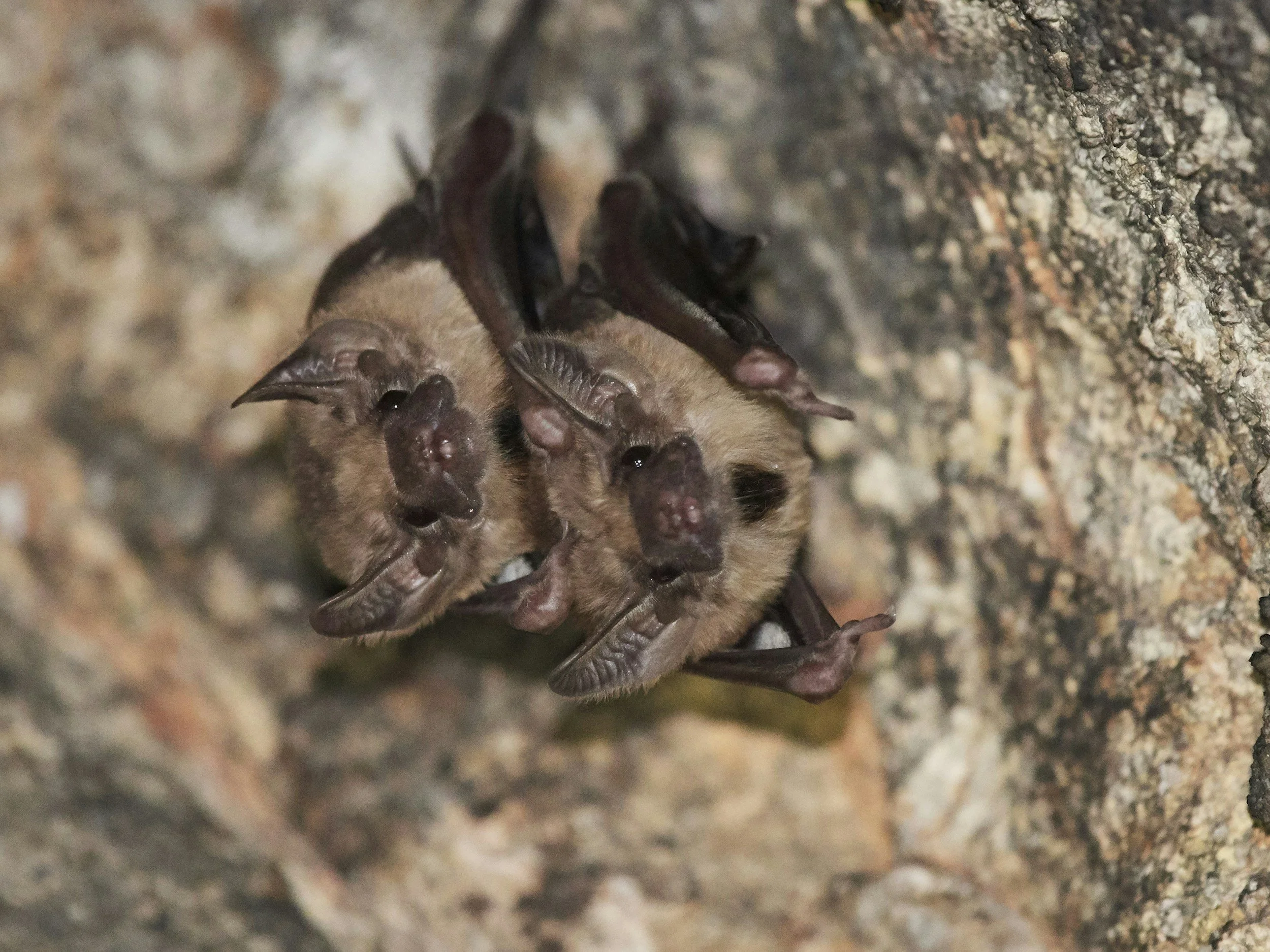
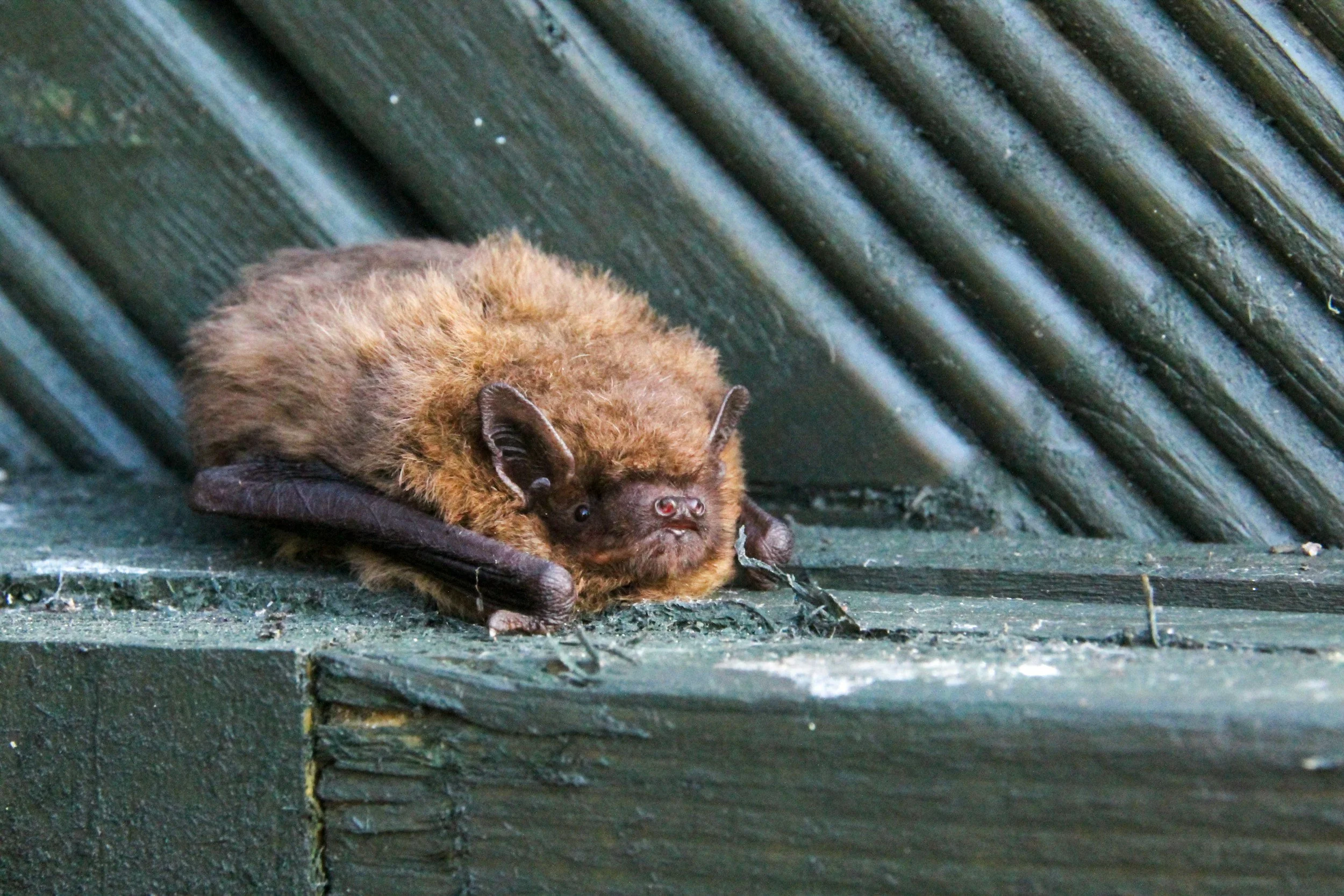
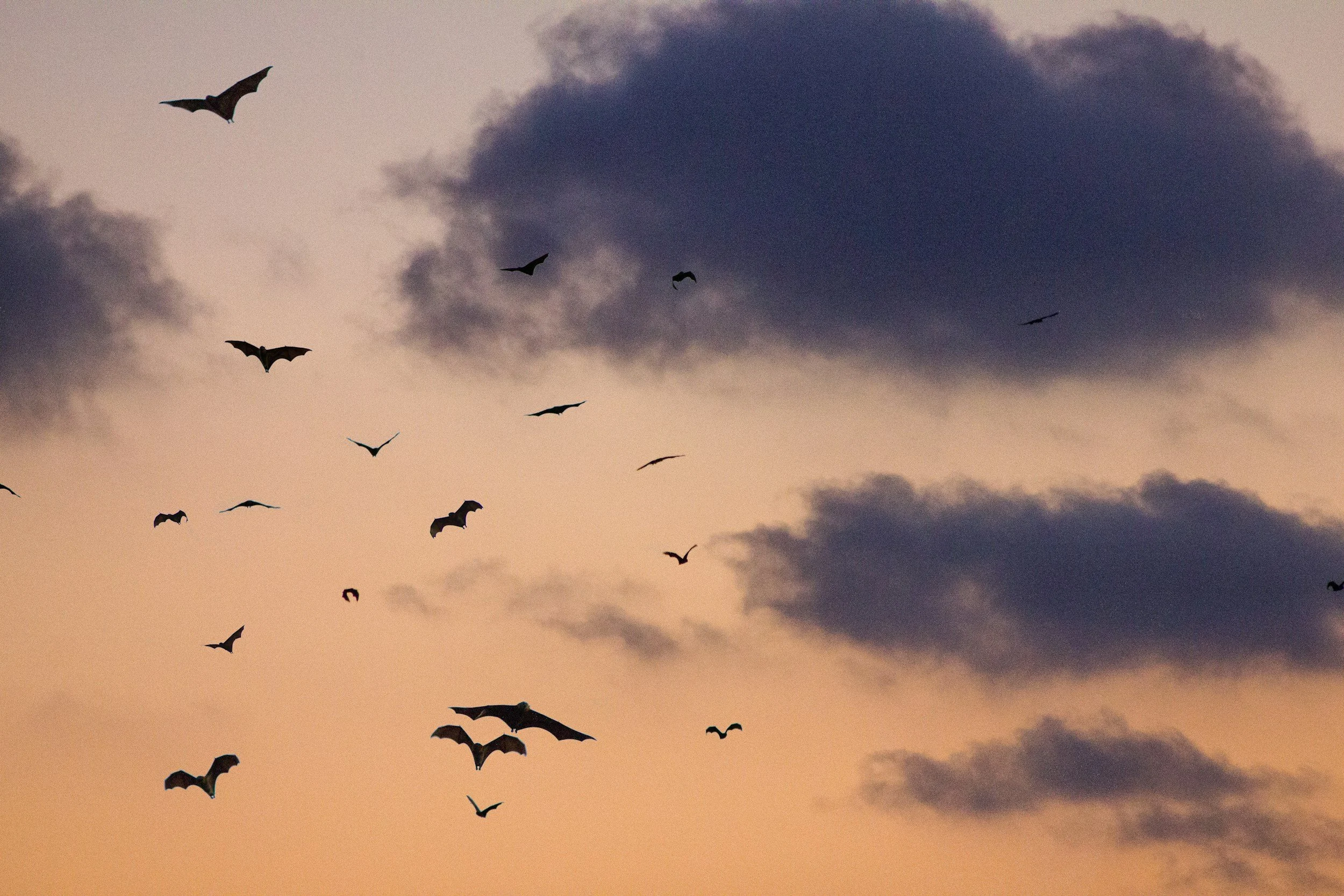
Bats are kind of like the secret ninjas of your night sky, swooping through the dark and gobbling up insects that bug both you and your plants. Most bats in North America eat insects, which means fewer mosquitoes, gnats, and other pests in your yard. They play a huge role in healthy ecosystems, and with natural habitats disappearing, your backyard can become a tiny oasis that helps them thrive.
What Bats Really Need: Food, Water, and Shelter
Food
Bats don’t dine on pizza or fruit snacks (unless you live in the tropics and have fruit bats, as cool as that sounds).
Most local bats hunt night-flying insects, so the goal is to grow a habitat for the bugs they eat. That means:
Plant native flowers and trees that support moths, beetles, flies, and other nocturnal insects; they’re bat snacks.
Go for light-colored or strongly fragrant flowers that stay open at night.
Skip pesticides and artificial chemicals; they kill off the insects bats need.
The more insects. The more reasons bats have to visit your yard.
Water
Bats drink while on the wing, meaning they skim over open water rather than perch to sip. A pond, long trough, or even a pool with a clear flight path can serve as a water station.
Tips for bat-friendly water:
Make sure it's long enough (think 7–10 feet) so bats can swoop and drink.
Keep the approach clear of clutter so flying isn’t like an obstacle course.
If you have a pool, consider how chlorine and other chemicals might affect wildlife.
Even a simple water source makes your place more inviting after dark.
ShElter
Bat Houses: Optional, But Fun
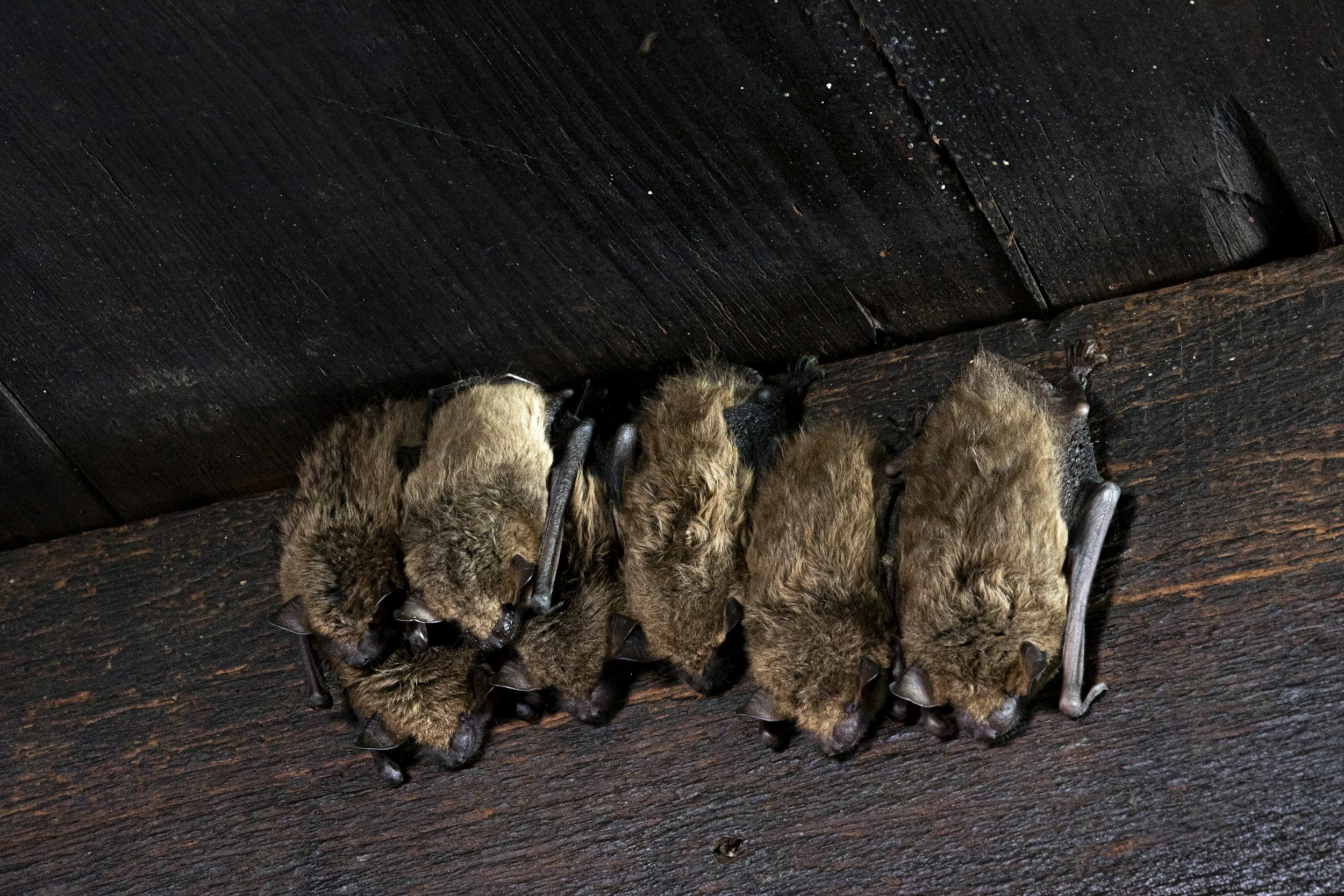
Adding a bat house is like putting up an Airbnb in your yard, but for bats. That said, they’re not a guaranteed invitation. Some homes go unused for years, and bats are picky about exactly how and where they roost.
Here’s what helps:
Mount the house high (ideally 12–20 feet up) with at least 7+ hours of sun each day.
Keep the space below clear so bats can drop and fly easily.
Avoid placing near branches that predators could use as a launch pad.
Don’t try to lure bats in or move them; they’ll show up on their own timetable.
If you do get occupants, observing the nightly flurry of wings is one of nature’s coolest light shows.
Build a Bat Garden They Can’t Resist
Plant for the Night Shift
Think night-bloomers and native species. Plants that stay open late attract insects, and that’s the first step in building your bat buffet. Trees like oaks also host tons of insects and can create a natural foraging space. Fallen logs or dead branches aren’t pretty, but they’re bug magnets, and bats consider that a plus.
Ecology Amateurs tip: Don’t worry about your garden being “perfect.” Messy, layered, and diverse is exactly the vibe bats love.
Be a Bat-Friendly Neighbor
Bats don’t only care about your backyard; they care about your whole neighborhood. Even if your garden isn’t big enough for everything they need, you can:
Partner with neighbors on bat-friendly plantings or water sources.
Share bat tips with your community.
Advocate for less pesticide use in shared green spaces.
Bats need connected habitat patches to thrive, so every little bit helps.
Safety and Respect
Bats are wild animals, and while they’re incredibly beneficial, we don’t recommend handling them. If you find one grounded or in need of help, contact a local wildlife rehabilitator rather than trying to “rescue” it yourself.
Also, keep outdoor cats indoors at night; they’re one of the biggest threats to bats and other wildlife.