On October 10th, birders around the world celebrated October BIG Day, a citizen science birding holiday held on World Migratory Bird Day. The Goal: find as many species as possible in 24 hours. Follow along as we go from restored grasslands to the reservoir’s edge on a quest to count birds!
The morning began with a peaceful, hour-and-a-half long drive in the predawn. The sun had just started to peek over the horizon as I turned off the interstate; nearing my destination, Kankakee Sands Nature Preserve. At that moment, I got my first species of this October BIG Day–Canada Goose, a flock of 12 flying over the exit. As I approached the southern extent of the preserve, my eyes caught a brief glimpse of a large raptor taking off beside the road. Not getting a good enough look to identify it, I considered turning around but decided not to, despite feeling like that choice would come back to haunt me like a restless poltergeist.
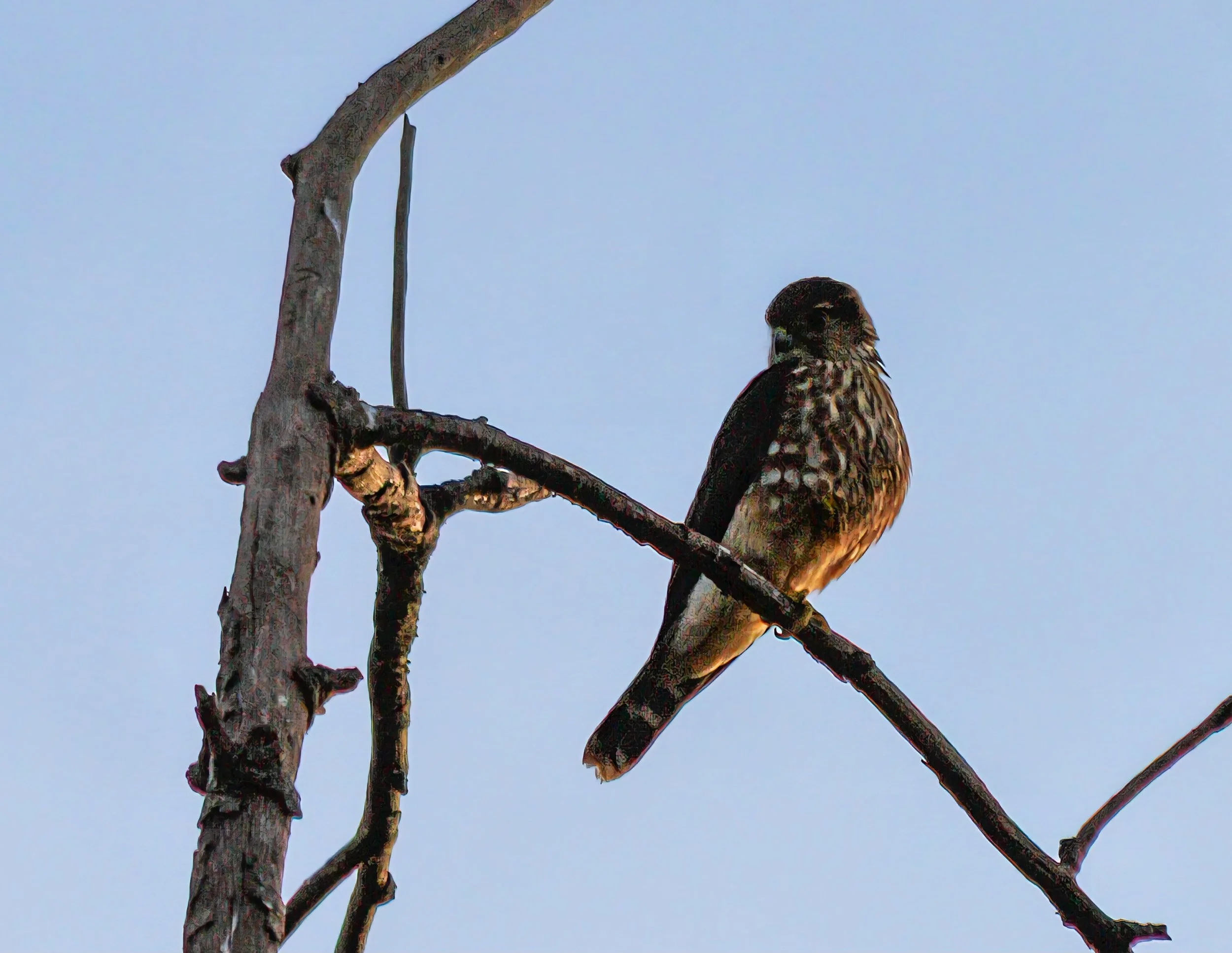
My first stop was at the Bison Viewing Fields, starting an eBird checklist there at a quarter after 7 am local time (CDT). I got my backpack and gear ready, only to immediately set it all down on a nearby picnic table. I was surrounded by sparrows, the calls of several species being heard in every direction. White-crowned Sparrows were the most numerous, with plenty of adults and juveniles, along with a handful of the adorably baby-faced Field Sparrows. Glassing the horizon with my binoculars revealed one of my target species for the region, a Northern Harrier, characteristically gliding just above the golden-brown grassland vegetation. I looked over to a large snag (dead tree) beside the trail, where a dozen or so Brown-headed Cowbirds had filled the bare branches just moments before. A lone bird was perched in their place, a small raptor that looked vaguely familiar. It was close, so I managed to get multiple good looks through my binoculars and snapped off several shots with my camera; even pulling out my phone to start trying to confirm an ID with the Audubon app. But then it took flight, speeding towards a small group of some kind of blackbirds already flying nearby. In magnified detail, I watched in awe as the pocket-sized predator attempted to prey upon two separate birds, both of which just barely managed to outmaneuver and evade their pursuer. It was an exhilarating experience to see first hand, a truly amazing start to an all-day birding adventure. So what was this mystery raptor? After reviewing the photos and getting confirmation on iNaturalist, I was thrilled to be able to add a Merlin to my life list!
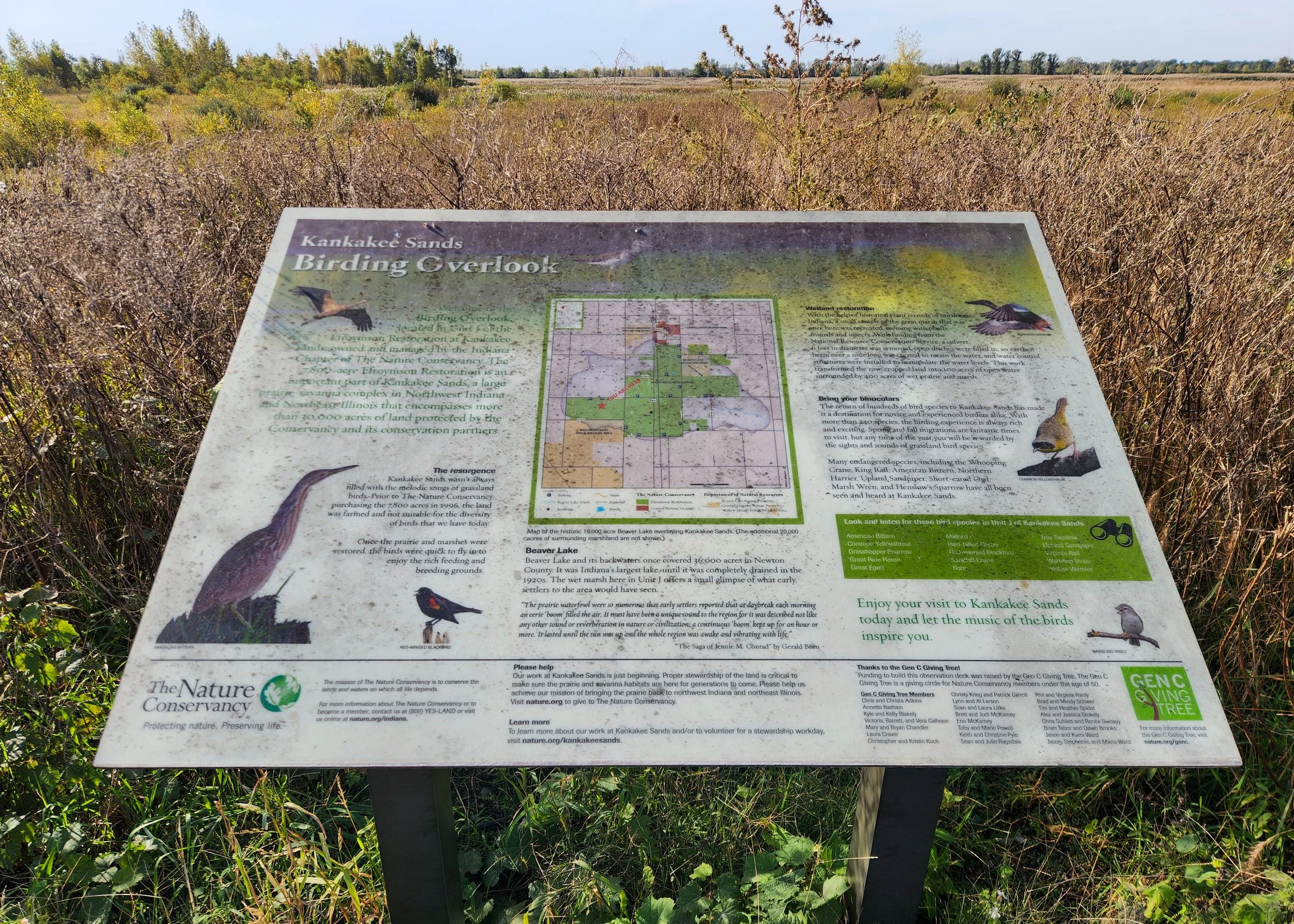
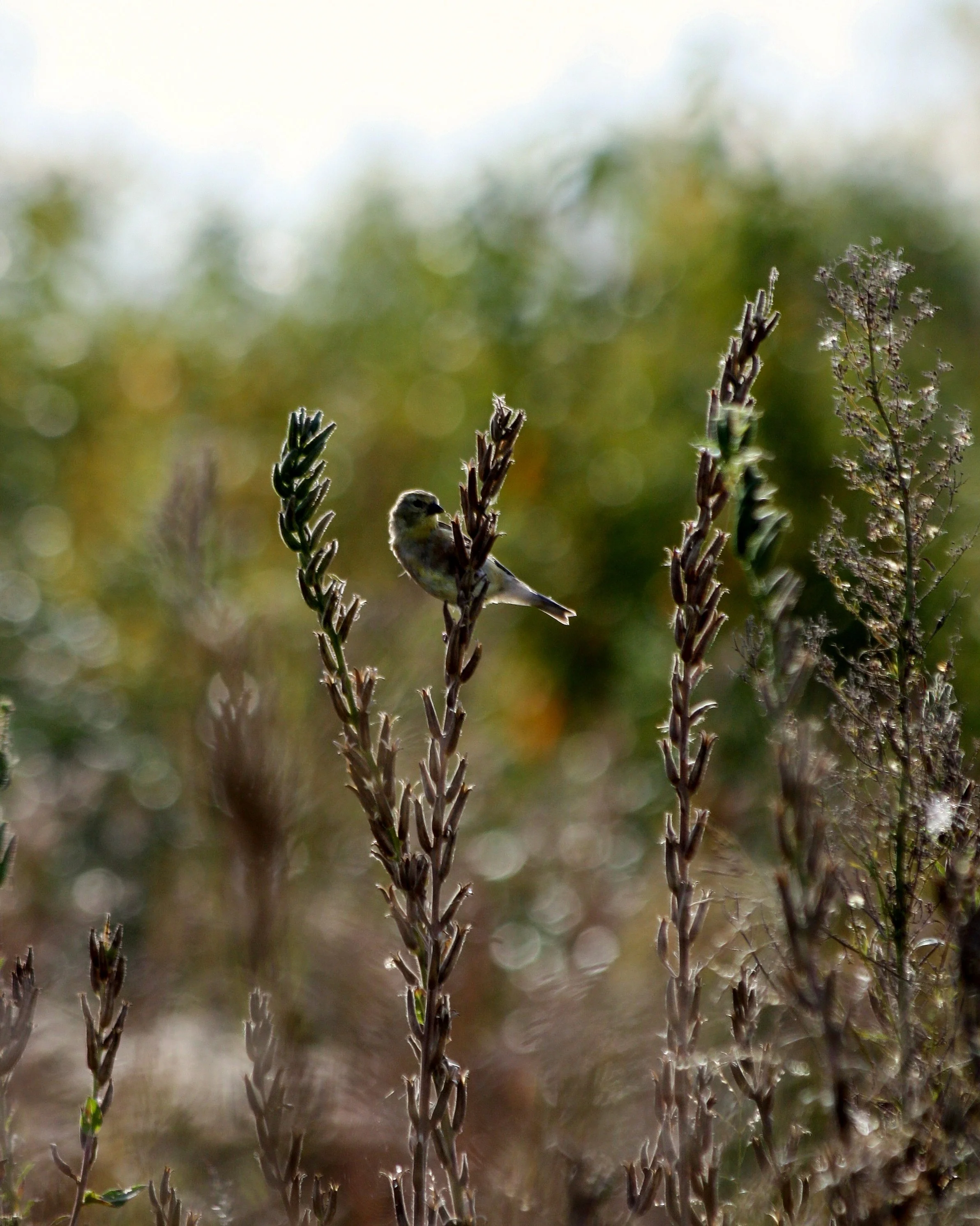
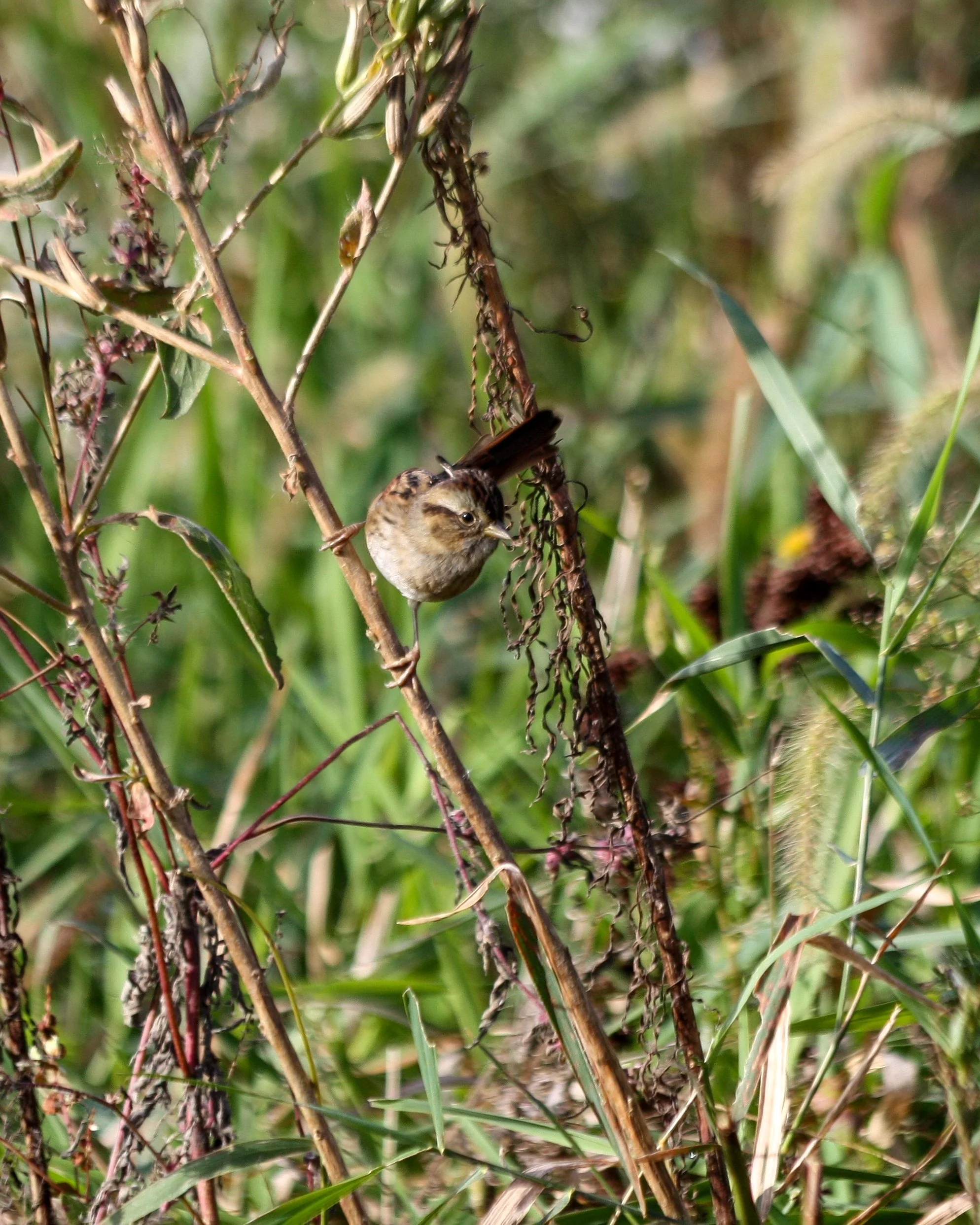
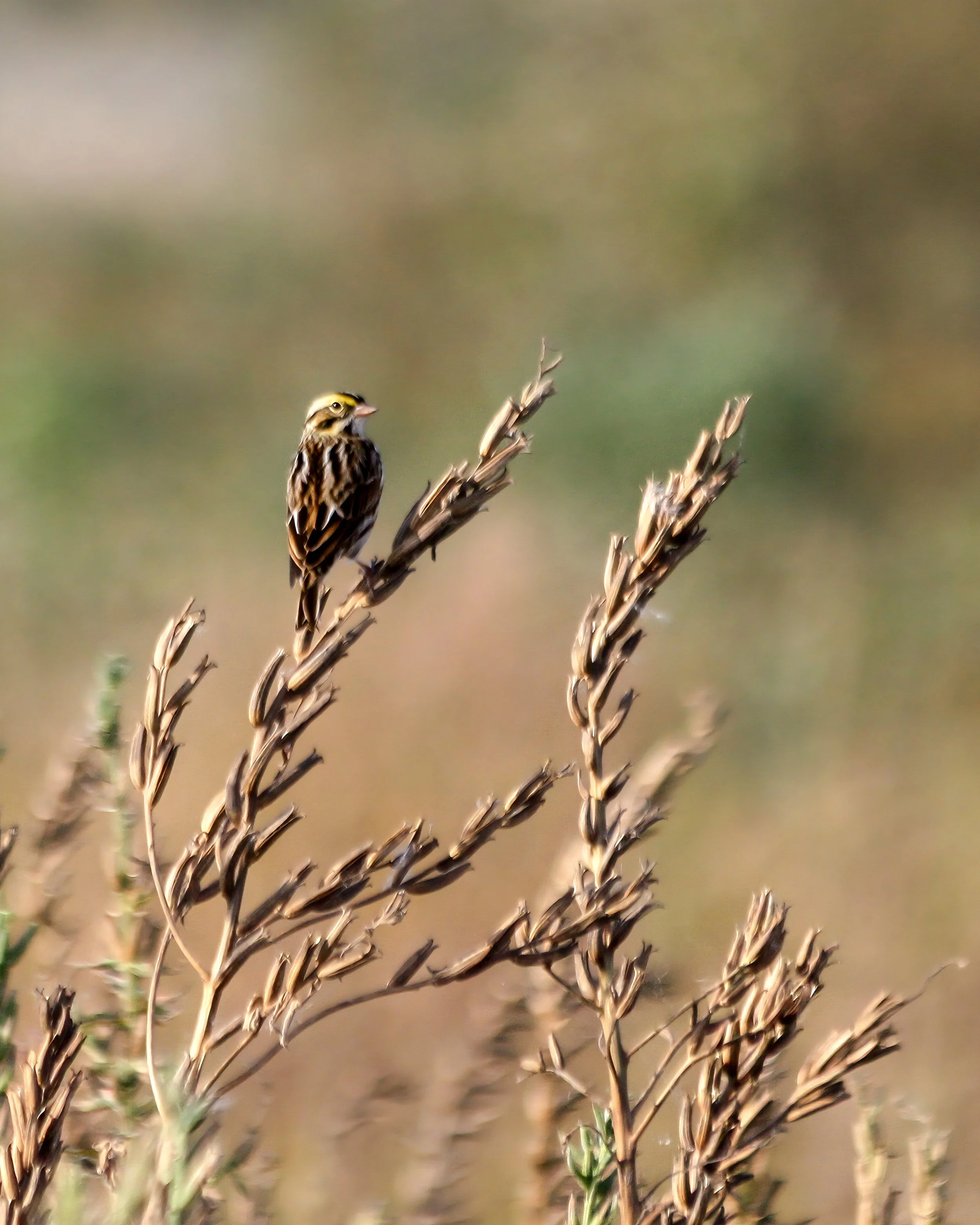
Next up was the Birding Overlook, officially known as Unit J (Kankakee is sectioned off in sometimes separate, alphabetically-named units). Before I even had a chance to get situated after stepping out of the car, I was greeted by a Palm Warbler in the brush nearby. Walking down the short trail to the wetlands revealed a Savannah Sparrow and a few American Goldfinches. Coming up to the wetland, it turned out not to be very wet. It felt almost barren, at least until a single “chip” could be heard repeatedly coming from the vegetation. It was about 20 meters away at first, but started to come closer. The Merlin app was suggesting a Swamp Sparrow, and it would certainly make sense given the habitat. Finally, it came into view, and it was indeed a Swamp Sparrow. The medium-sized sparrow had an inquisitive vibe, as if wondering what I was doing there; before disappearing back into cover, still chipping every few seconds. More Goldfinches had arrived, and their cheerful calls filled the air as I returned to my car. On the way out, I paid attention to the dairy farm on the other side of the road, spying an immature Bald Eagle perched on a crop irrigator in the field.
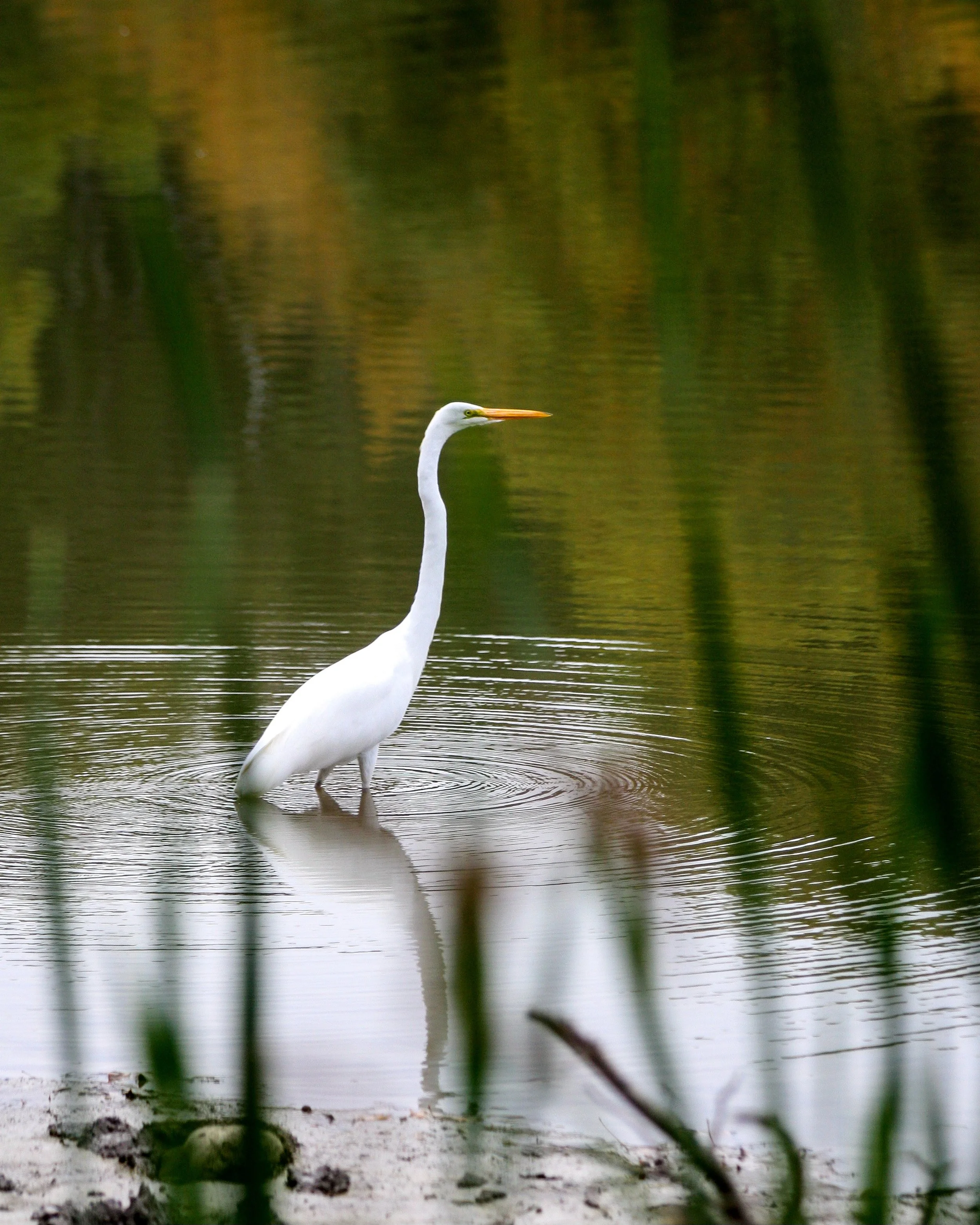
There was one more unit in particular I wanted to check out, Unit D. There’s a pond only a short distance from where you can park, so stopping by there was a must. I flushed a few Eastern Meadowlarks upon arrival, a bird I had only heard so far that day. Walking up to the pond spooked a Great Blue Heron as well, unfortunately. A Great Egret remained unbothered, stalking the opposite shoreline. Aside from seeing numerous Tree Swallows above the pond and Turkey Vultures in the distance, there were surprisingly few birds so I didn’t stay long.
After mostly visiting open grassland, I was ready to mix it up by going to the Conrad Station Savanna to explore some oak savannah habitat. The partial canopy provided by the oaks blocked most of the sun that was beginning to glare down, and it helped obscure some of the road noise of the nearby highway. The atmosphere felt peaceful, and it wasn't long until I heard the amusing calls of a White-breasted Nuthatch. Rounding a turn on the trail was a small group of obvious birders, with someone in front that I recognized. Local moth expert and fellow Friends of the Sands volunteer, Jeanette Jaskula, was leading a birding hike around Kankakee Sands that morning in partnership with Indiana Audubon. We briefly chatted about birding and then continued along the trail in opposite directions. She had mentioned hearing Northern Flickers and Red-bellied Woodpeckers, and I began to hear them too soon after. I also managed to track down an Eastern Towhee that could be heard in the dense undergrowth. The oaks began to form more of a forest than a savannah as I trekked deeper into the preserve, and the bird life reflected the change. I was quickly coming down with a case of “warbler neck”, trying to see what small birds were flitting amongst the tree tops. I caught brief glimpses of Golden-crowned Kinglets and a Hairy Woodpecker, only hearing and not seeing Black-capped Chickadees. It was right around noon when I finished the 2-mile long trail, and with it really warming up I was relieved to be done and moving on.
I made one more brief stop before leaving Kankakee Sands, going to the recently improved Welcome Area. The only birds to be found were European Starlings, so I quickly counted them and then hit the road. The drive back home provided a birding opportunity in itself, as it often can. Flocks of Feral Pigeons and two roadside Red-tailed Hawks were the last species added to the list before pausing for my midday break back at the house.
With all my necessary tasks for the day done and out of the way, I was joined by my partner, Amanda, and we were off to spend the evening at Eagle Creek Park. We arrived just before 5 pm (EDT). The sun wouldn’t set for at least another two hours but the overcast sky made it feel later than it was. Low-visibility would increase the difficulty for birding and photography, but nevertheless we were excited and hopeful. Eagle Creek is always a popular spot for birding in central Indiana, but even more so lately due to some unlikely migrants. A White-faced Ibis has been all the rage for the past couple weeks now, plus a Brown Pelican who’s been there almost twice as long. The Brown Pelican had become a personal nemesis bird, as I’d made three trips to Eagle Creek in the past month in an attempt to see it, but it eluded me every time.
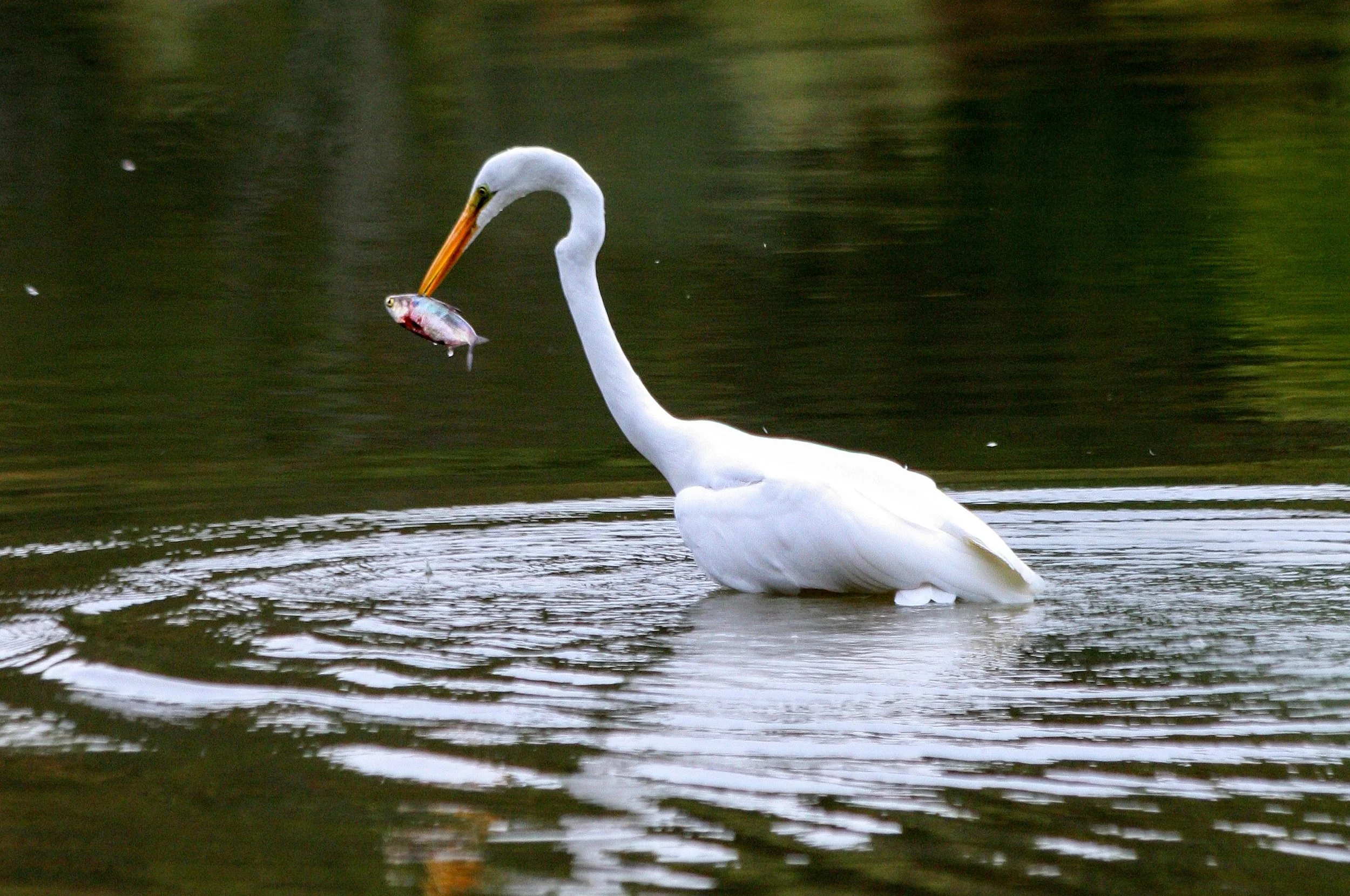
The North Loop of the park was surprisingly quiet–I’m not sure if it was the weather, or something else–but we weren’t seeing or hearing much at first. Dense patches of branchy shrubs and thick vines seemed like they should be teeming with wrens and other skulkers. “I’d skulk the f*** outta that place”, I said to Amanda with a bit of confusion. Once the mudflats became visible from occasional clearings in the trees, my focus turned to scanning every square inch of it for that ibis. The crisp, white plumage of Great Egrets dotted the landscape, standing out against everything that was much darker in comparison. It was only a little further down the path that an egret gave us a remarkable demonstration of their fishing prowess. In the blink of an eye, the egret’s lengthy, orange bill was plunged into the water, returning with a perfectly-impaled fish. Witnessing this successful hunt felt like it would be the highlight of the day, and it certainly was close. We picked up a few more songbird species on the rest of the trail, but the path felt like it was dragging on as we were anxious to get a closer view of the reservoir.
Surrounded by water on both sides of the coffer dam trail, the birds were everywhere now. Cormorants, gulls, geese, herons–all numbered in the dozens. Pelicans could immediately be seen, but only the typical American White Pelicans, no Brown. A couple of small ducks caught my eye, so I took a couple of photos to investigate more closely later. Counting all of the birds became a challenge of its own, but thankfully Amanda was willing to help there. We debated how much further we should go; the sun was quickly setting, but the allure of the Brown Pelican made turning back feel like defeat. It wouldn’t be, though. On our return pass by the pelican flock, we surveyed the mass of enormous waterbirds one more time… and there it was! A brown blob tucked behind the others, just barely visible. That brown blob lifted its head momentarily, confirming that we were seeing our target species! It was too dark at that point to take pictures, and my camera was packed away already, but I didn’t mind. I was overjoyed just getting to finally see a bird that had eluded me for weeks. We pointed it out to a few curious onlookers, who were thrilled to see such a rarity. It was getting darker by the minute, but our excitement was glowing as we walked triumphantly back to the parking lot.
Back home with only the faintest hint of daylight left, I sat out on the back porch in the hopes of hearing any more birds. I’d realized I still didn’t have an American Robin for the day, which should be an easy find on almost any BIG Day. There was a good chance to hear one since they’re among the first songbirds to sing before sunrise and the last to sing after sunset, but not that night. With the nighttime begun and no plans to go owling, it was time to start reviewing my photos. It was at this point I had confirmed the ID of my morning Merlin, along with figuring out what those ducks from Eagle Creek were. Noting their small size at the time was a helpful clue, as they turned out to be the smallest dabbling duck in North America, the Green-winged Teal. My second lifer for the day! After checking my pictures and revising my checklists, my total for the day amounted to 49 species. Going through my overall list for the day again, I was shocked to not see a House Sparrow anywhere on there. I somehow didn’t see a House Sparrow, you know, the most widely-distributed wild bird in the world! And that’s when I remembered my brief check for birds in the backyard just before going to Eagle Creek. I heard and saw several of them on the trumpet vine growing up my neighbor’s fence. Assuming I had already seen them earlier in the day, I didn’t think anything of it at the time and didn’t record them on eBird. I made a quick checklist retroactively, bringing me to a final total of 50 species for October BIG Day 2026!
To be honest, this BIG Day did not go as planned. I was originally supposed to spend the weekend in southern Illinois, hitting up several new spots for BIG Day and then walking Snake Road the following day. And that was actually just a backup plan for a trip to Arkansas and Oklahoma that was in the works but fell through. Life doesn’t always go as planned; car repairs, camera errors, and any other number of challenges can throw a wrench into things. Birding can be a reminder to appreciate what you have and who’s around you. Cheap binoculars still bring you closer to a new bird, old locations can offer something new, and memories made in the field will last a lifetime.
While I didn’t set any BIG Day records for myself, the same simply cannot be said for the rest of the world. More than a million people went birding for October BIG Day this year, surpassing last year’s record-breaking 870,000+ participants! That wasn’t the only record broken, though. A total of 7,934 species were seen, submitted on 121,248 checklists for the day, both record numbers! Seeing the participation increase each year is so uplifting, especially when you stop and think about how it translates to more data gathered about the birds we love.
Join us on May 8th, 2027 for another avian adventure on Global BIG Day!